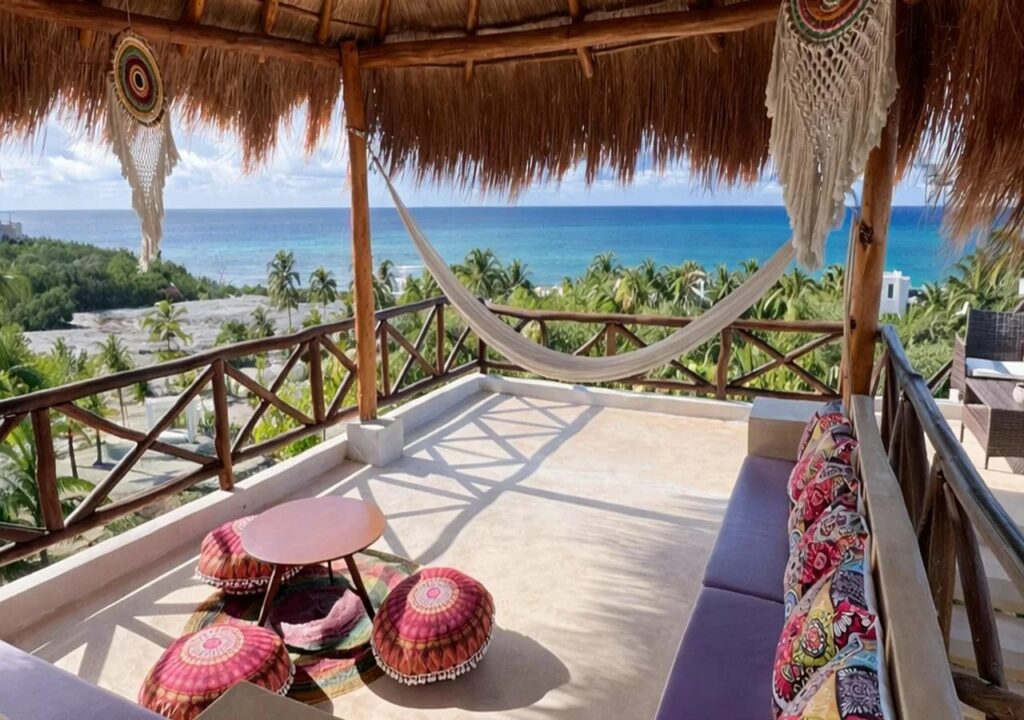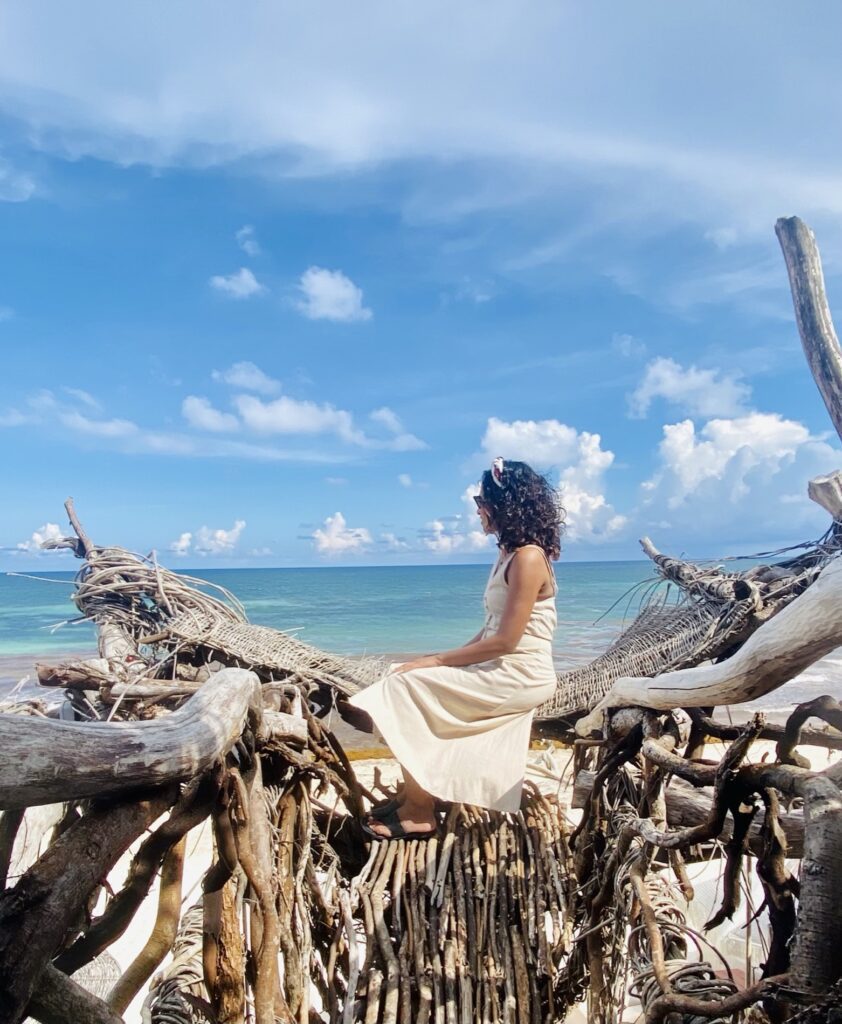
Ten past six in the morning, on the dock in front of the house, with a ring in your pocket and somebody beside you who thinks you are both just watching the sun come up. Nobody else is awake. The water has not moved yet. No booking, no guide, no entrance ticket, nothing that can go wrong.
That is the version that works, and it is the one almost nobody plans, because the photographs people arrive with are of somewhere else — somewhere with an opening hour, a queue and a rule about what you may do when you get there.
Here are five that exist on this coast, with what each one actually permits.
One. The cenote you do not have to share
The Quintana Roo board names three cenotes around Tulum — Dos Ojos, Gran Cenote and Calavera — and a lagoon, Kaan Luum, all of them part of what it calls one of the largest underground river networks on the planet. They are extraordinary. They are also public, and by mid-morning you are sharing the water with everybody who read the same page.
So if the cenote is the idea, the move is to stay somewhere that has one.
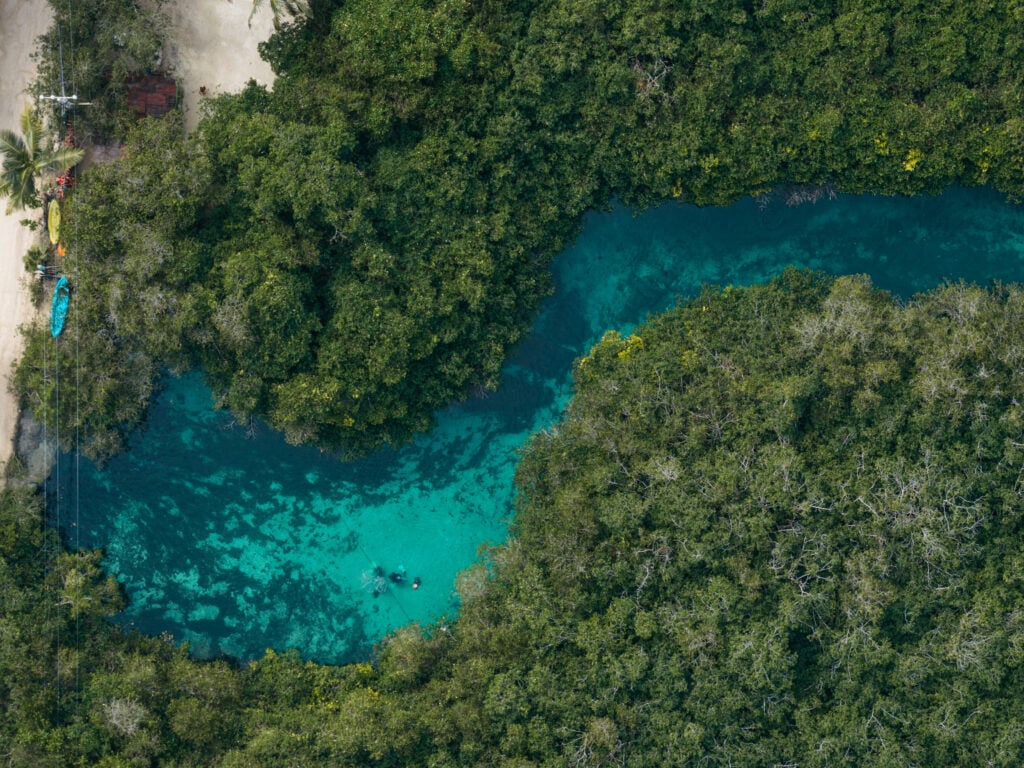
Casa Ixchel on the Tulum beach road has a private cenote with a two-storey deck, a changing room and a mangrove boardwalk trail — a cenote you walk to from the kitchen. Villa Blanca on Tankah Bay has one on the property and an overwater palapa pier to go with it. Casa Cenote at Puerto Aventuras is named after its own. Onze Sanctuary inland has one with a slide in it, which is the opposite of romantic and will make somebody laugh.
Early morning, nobody else there, the light coming down through the hole in the roof of the jungle.
Two. The walled city, at opening
The ruins at Tulum are the only Maya site built on the edge of the sea, and the state board's single piece of advice about visiting them is the right one: arrive at opening. Half an hour later it is a different place.
What you get at that hour is the wall on your left, the Caribbean in front, and El Castillo on the cliff with almost nobody between you and it. INAH's own page for the site explains that the name means wall or palisade and that the wall encloses the main complex on three sides, with five entrances and two watchtowers. The board adds the detail that makes it land: from up there the city's rulers watched the canoe traffic, and El Castillo was probably also a lighthouse — a fire in the summit temple guiding boats through the one gap in the reef.
Two rules. You may not climb anything: INAH lists El Castillo, the Temple of the Descending God, the Temple of the Wind God and two more as closed to entry, so you look from the path. And since September 2024 the beaches beside the site sit inside the Parque del Jaguar, a federal protected area whose access arrangements have changed more than once — the Quintana Roo board on the beaches below it says there is free public access to the sand as of November 2025, and tells you to check the current rules before you go.
So: no staging, no tripod, nothing roped off. Walk in at opening, go to the far side where the cliff drops to the water, and ask.
Three. Sian Ka'an, slowly and with a guide
South of everything the road thins out and the reserve begins. Sian Ka'an has been a federal protected area since 1986 and a UNESCO World Heritage site since 1987: 528,000 hectares of jungle, wetland, lagoon and sea, with jaguars, manatees, crocodiles and more than three hundred recorded bird species, and six hundred-odd people living inside it.
The thing to see is the canals. The board's own account of Sian Ka'an explains that beside the Muyil site the old Maya cut narrow channels linking the lagoons to the sea, part of their coastal trade routes, and that you can travel them today — mangrove either side, birds overhead, and a quiet that is rare on this coast.
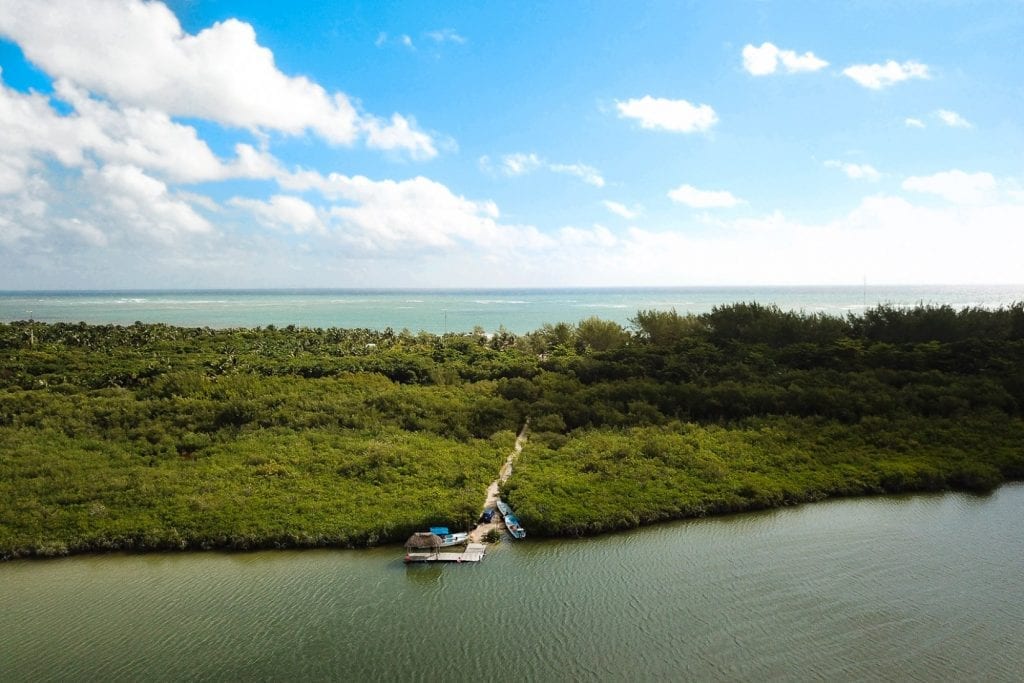
The board's instruction for visiting is three things: go slowly, go with a local guide, and leave no trace. Access to the canals is accompanied and booked in advance. That is not a restriction to work around; it is the reason the place is still like that.
It is a morning, and it is the one of the five that needs organising. A house manager books it; a driver for the day gets you down and back. From the beach road you are already most of the way there — Casa Ixchel is the last property before the entrance.
Four. The dock, at first light
The flattest water of the day is the water before seven, and this coast has a lot of docks.
La Colección Residences on Isla Mujeres has its own, running out into the bay with Cancún a line of light across the water; you arrive by yacht from the mainland, twenty to thirty minutes over. Villa Bella Vita on Tankah Bay faces east into the sunrise.
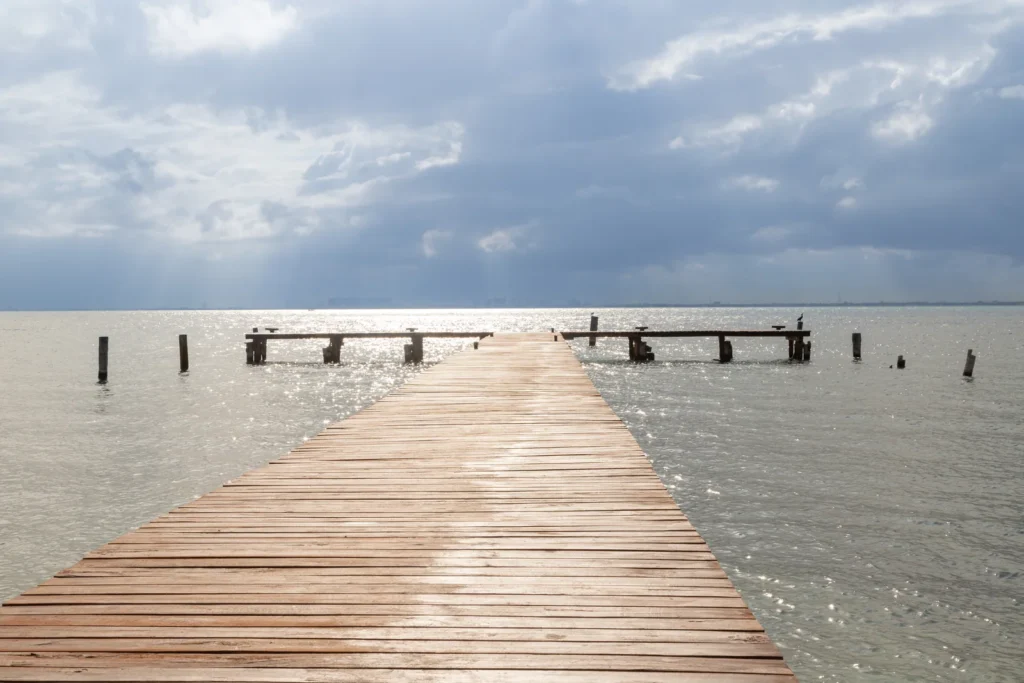
This one works because there is nothing to go wrong. No ticket, no captain, nobody else booked in at the same hour. Take two coffees; the staff will have made them if you ask the night before, and they will not say a word.
Five. The table of the house you are already in
And then the one that works most often.
A staffed house has a chef already there, a manager who knows where flowers come from at eight in the morning, and a terrace that is yours until Tuesday. Nobody has to be told anything except the hour. Dinner happens the way dinner was going to happen, the plates go, and then the table is quiet and the rest of the house has conveniently gone to look at something.
It has none of the drama of a cenote at dawn, and it is the version people describe afterwards without mentioning the setting at all — which is the tell.
The honest part
Three of these five need somebody else's permission and two do not, and the two that do not are the ones that survive bad weather, a changed flight and a cold. So plan one of the first three and keep the fourth or fifth in your back pocket. If the morning at the ruins turns out to be the morning it rains sideways, nothing is lost: what Tulum is known for will still be there tomorrow, and the answer does not change with the weather.
Start with our houses in the Riviera Maya — tell Alexa which of the five it is and how many people are supposed to be surprised.
Questions about Riviera Maya & Tulum
Where is the best place to propose in the Riviera Maya?
The house you are already in, more often than people expect, because it is the only one of the five that you control. The other four are worth doing and each has a rule attached: a cenote on the property is private, a public one is not; the ruins have an opening hour and a park around them; Sian Ka'an is entered with a guide; the water is the water. Pick the one that suits the two of you rather than the one that photographs best.
Can you propose at the Tulum ruins?
You can be there, early, which is what the state tourism board recommends — arrive at opening. You cannot climb anything: INAH lists El Castillo, the Temple of the Descending God, the Temple of the Wind God, the Serie Inicial temples and the Casa del Cenote as closed to entry, so you look from the path. Since September 2024 the beaches beside the site sit inside the Parque del Jaguar, a federal protected area whose access rules have changed more than once, so check them the week you go.
Can we have a private cenote to ourselves?
Only if the house has one. Several of ours do: Casa Ixchel in Tulum has a private cenote with a two-storey deck and a mangrove boardwalk, Villa Blanca on Tankah Bay has one on the property, Casa Cenote at Puerto Aventuras is named after its own, and Onze Sanctuary has one with a slide in it. The cenotes the state board names — Dos Ojos, Gran Cenote, Calavera — are public and busy by mid-morning.
What about Sian Ka'an?
It is a biosphere reserve of 528,000 hectares, a UNESCO World Heritage site since 1987, and the board's own instruction for visiting it is to go slowly, go with a local guide and leave no trace. The Maya canals beside the Muyil site are the thing to see — narrow channels the old traders cut between the lagoons and the sea. It is a morning, booked in advance, not a spontaneous afternoon.
Can the house help us set it up?
On a staffed house, yes, and it is the simplest of the five. The chef is already in the kitchen, the house manager already knows where the flowers come from, and nobody needs to be told anything in advance except the hour. Say it when you book rather than on the day.
Three ways to spend a day
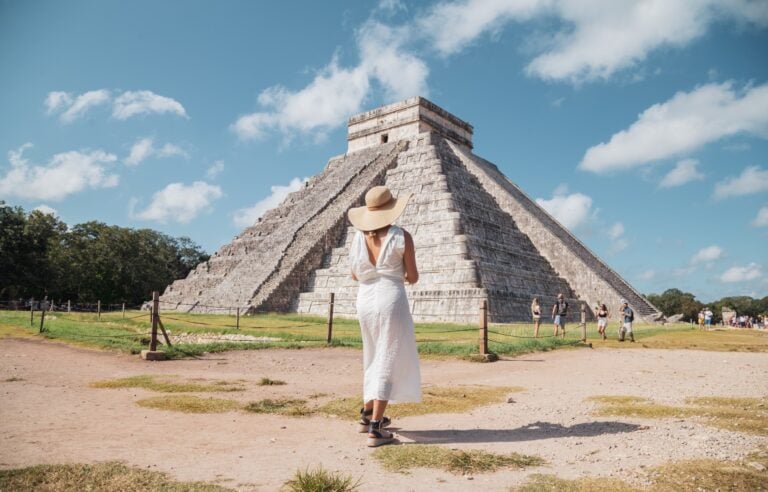
Chichen Itza with Valladolid and a Cenote
4.6 · 1,237 reviews on GetYourGuide
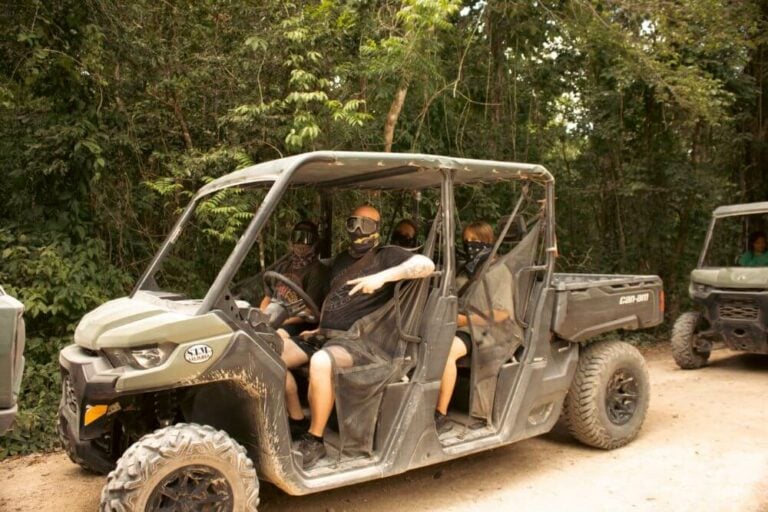
Buggy and Cenote Tour from Playa del Carmen
4.8 · 396 reviews on GetYourGuide
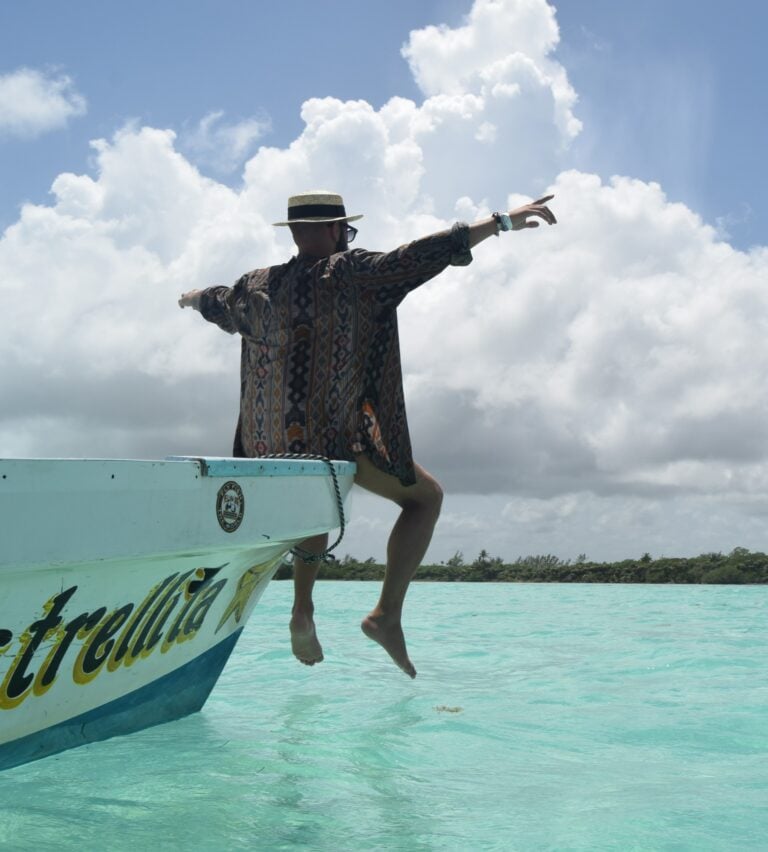
Sian Ka'an Boat Trip with Lunch
4.8 · 324 reviews on GetYourGuide
Some links on this page are affiliate links: if you buy through them, Villa Experience may earn a small commission at no extra cost to you. We only list services we would use ourselves.
Read next
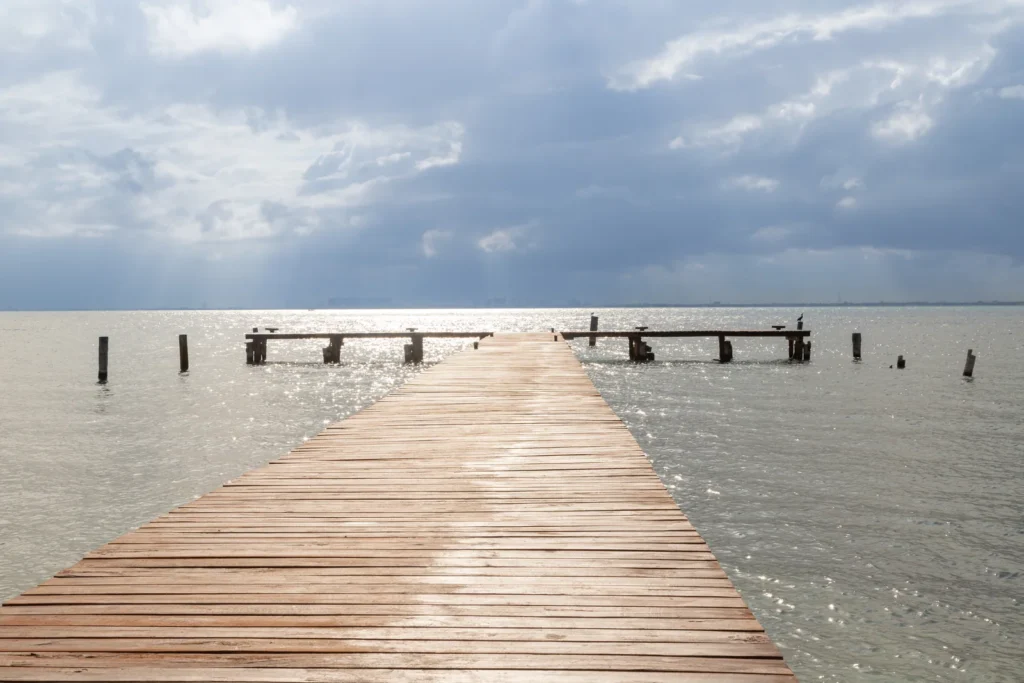
Isla Mujeres for a Group: Three Houses, One Dock
Three beachfront houses side by side on the sheltered side of Isla Mujeres, let singly or as one estate for forty-eight. What the island is like with a group.