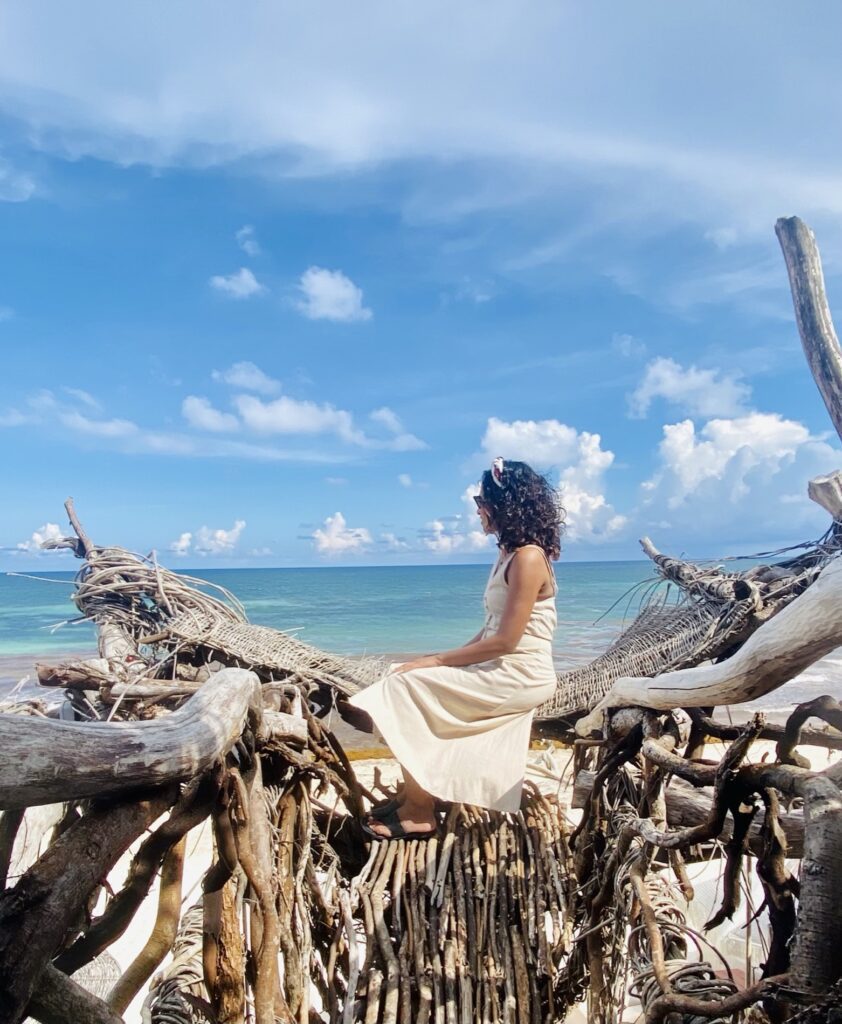
At seven in the morning the gate at the ruins is still shut, a few dozen people are waiting with coffee, and the iguanas have the place to themselves. Half an hour later you walk in, the wall on your left, the sea in front of you, the cliff dropping to a beach nobody is on yet. By eleven it will be full. The whole of Tulum works like that: it is a question of what time you get up.
This guide is in sections. Read the ones you need.
Getting there: TQO, or Cancún
Tulum has its own international airport now. Aeropuerto Internacional de Tulum "Felipe Carrillo Puerto" — code TQO, not the one some guides print — opened in December 2023, and the Quintana Roo tourism board puts it about twenty-five minutes from the town. We wrote about the new airport when it opened; it has changed the arithmetic of a Tulum week.
Cancún is still the bigger door: four terminals and the most international connections in the country. The two airports sit at opposite ends of the same coast, about 120 kilometres apart, joined by federal highway 307, and the board's benchmark for that road is that Puerto Morelos to Tulum takes a little over an hour.
So: fly to TQO if the fare and the routing work, and to Cancún if they do not. Neither is a mistake. There is also a train now — four stations on this coast, two of them Tulum's own — which for a group with luggage is a curiosity rather than a plan. Getting around once you are here is its own small subject.
The three zones, and which one you want
The state divides the destination into three: the archaeological site, the pueblo and the coast road. That is a better map than the one most guides draw.
The coast road is what people mean when they say Tulum: sixteen kilometres of white sand running south from the ruins to the edge of Sian Ka'an, with the hotels, beach clubs and restaurants strung along it. Beautiful, busy, and the traffic on it in high season is the one thing nobody warns you about.
The pueblo is the town itself, inland, where people live. Better food for less, markets, a bus terminal, ten minutes from the beach road.
The archaeological site sits at the north end, and south of everything is Sian Ka'an, where the road and the electricity give out.
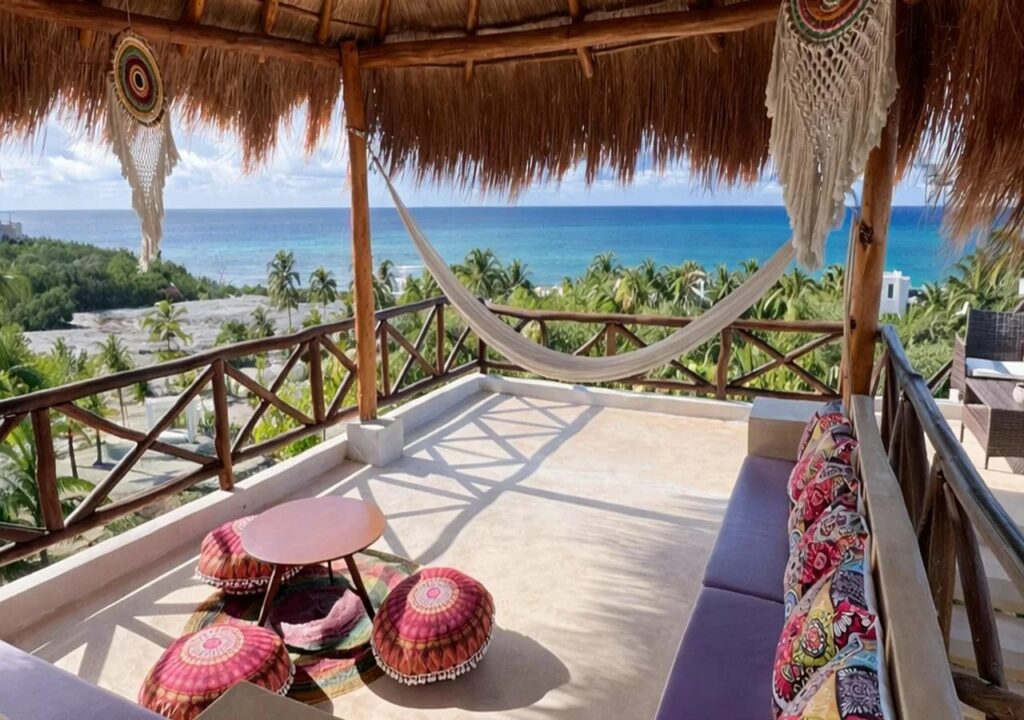
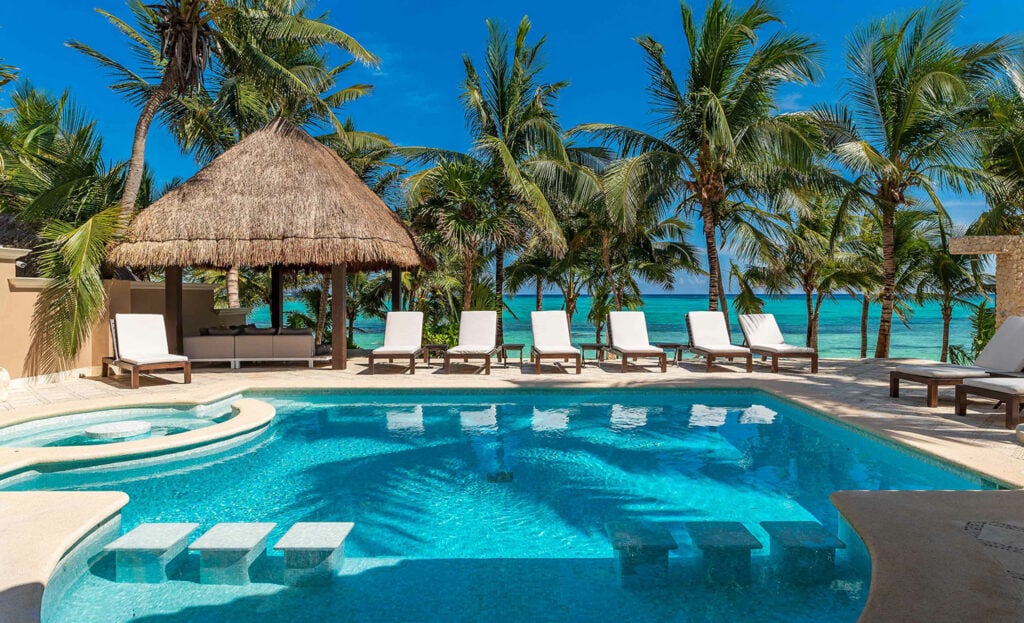
Our own houses are in none of the three. They are twenty minutes north, on Soliman Bay and Tankah Bay — reef-sheltered, shallow, almost no through traffic, a short drive from both the ruins and the town. If what you want from Tulum is the water rather than the scene, that is where to be.
The beach, and the sargassum question
Sixteen kilometres of it, white, shallow a long way out. Every Mexican beach is public to the high-tide mark, so you can walk from the ruins to Sian Ka'an if you have the day and the legs.
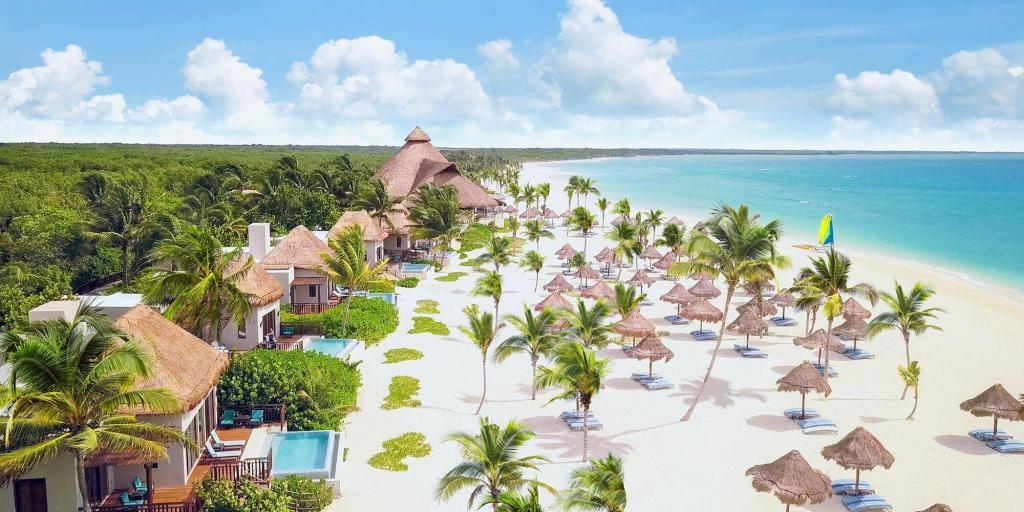
Now the thing nobody on this coast likes discussing. Sargassum — the brown weed that drifts in from the Atlantic — reaches the Caribbean side in some years and not others, and in a given week one bay can be clear while another a kilometre away is not. We will not print a month window, because no official Mexican source publishes one. What we do instead is ask the house the week before you travel and tell you what the beach actually looks like. On Soliman and Tankah the reef and the shape of the bays help; they do not make it impossible.
Cenotes, by name
Behind the coast the limestone is hollow. The Quintana Roo board calls this one of the largest underground river networks on the planet, and the cenotes are the places where the roof has fallen in.
The board names three and a lagoon, and those are the four this guide names: Dos Ojos, which is the one most people photograph; Gran Cenote, open to the sky and shallow at the edges; Calavera, which is a hole in the ground and nothing more elaborate than that; and Laguna Kaan Luum, which is a lagoon rather than a cenote, and shallow a long way out.
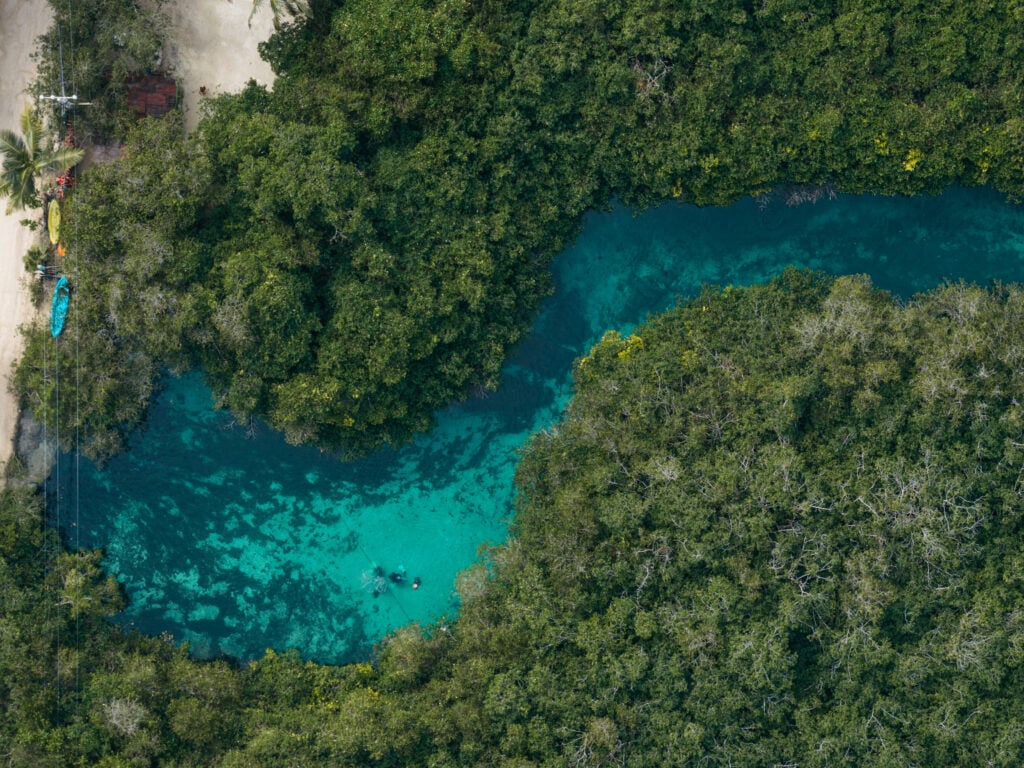
Three practical things. Go at opening time. Wear nothing on your skin — no sun cream, no repellent, no lotion — because all of it ends up in water that runs under the entire peninsula. And make your first one an open cenote rather than a cave; the caves are extraordinary and also, the first time, quite a lot.
The ruins: what you are looking at
Tulum means wall. INAH translate it as muralla or palizada, and the name is recent — it describes what you can still see: a wall closing the city north, south and west, the east side left open to the Caribbean, five gates through it and two watchtowers.
It is the only Maya archaeological site built at the edge of the sea, which is why it is on the cover of everything. El Castillo is the tall one on the cliff, built using the rock rather than on top of it; its temple has three doorways with serpent columns and a zoomorphic mask at each corner. The other building to find is the Templo del Dios Descendente, the Temple of the Descending God, whose upside-down figure above the doorway is the city's own emblem and turns up all over the site once you know to look.
You cannot climb any of it. El Castillo and several of the temples are closed to entry, and have been for years — you look from the path. The main entrance is on the Chetumal–Cancún federal highway, 128 kilometres south of Cancún.
Prices and hours change and two official pages currently disagree about both, so check INAH's own site the week you go rather than any article. What we will say is that ninety minutes here with somebody who can read the building beats four hours alone with a map — the guided walk of the archaeological zone is the one we book for guests.
Eating
Two different places. On the beach road the restaurants are designed, candle-lit, expensive and often very good, and you will need a reservation. In the pueblo you eat better for less, standing up, and the cochinita at eight in the morning is a serious argument for staying in town.
In the house you have a chef, which changes the question. Villa Lol Beh Soliman and Casa Yardena on Soliman Bay both specify daily chef service for twelve hours; at Hacienda Caracol along the same bay the chef works eight until half past six; at Cenote del Mar on Tankah Bay it is an in-house chef team, seven days a week. At Villa Na'iik inside Sian Ka'an all the meals are included in the rate, which is unusual here. Everywhere else the cooking is included and the groceries are billed at cost with a shopping fee.
Days out
Sian Ka'an, south, where the road ends and the lagoons begin — a day in a small boat through the mangrove channels, and the one trip we would not skip.
The cenote circuit, inland, which can be two or five depending on stamina.
Cobá, inland jungle ruins, which the state's own travel pages send you to with a hire car, and a different kind of quiet.
The festivals, if you are here for them — the music weeks are a genuine reason some people choose their dates, and a genuine reason others choose different ones.
When to come
Mexico works all year and we will not tell you to avoid a month.
The rainy season on this coast runs May to October, and the average temperature over the year is 26 °C. Rain here usually means a heavy hour in the afternoon rather than a lost day. Those same months are turtle months — May to October, with the nests on the beach and the hatchlings going down to the water at dusk, which for anyone travelling with children is the best thing that will happen all week.
Winter is drier and busier. Spring is the compromise. Pick on what you want to do, not on a chart.
How long, and where to stay
Five days is honest: a morning at the ruins, two cenote days, a day in Sian Ka'an or on a boat, one with nothing in it. Seven with children, because everything takes longer and the cenotes are worth repeating.
One honest word about the coast before you book. The Riviera Maya was built for visitors in a way the Pacific was not, and the Mexico you meet on the beach road is an arranged one. That is not a reason to stay away; it is a reason to put the house twenty minutes off it, eat in the pueblo twice and go inland once. What this side has is the water — flat, warm, turquoise — and that is the trade.
Start with the houses on the Riviera Maya and tell Rocío which bay.
Questions about Tulum
What is Tulum known for?
A walled Maya city on a cliff above the Caribbean — the only Maya archaeological site built at the sea's edge — sixteen kilometres of white sand running south to the Sian Ka'an reserve, and the cenotes behind the coast road, which belong to one of the largest underground river networks on the planet. Since 2023 it also has its own international airport.
Should I fly into Tulum airport or Cancún?
Tulum, if the fare and the routing work. Aeropuerto Internacional de Tulum (TQO) opened in December 2023 and the Quintana Roo tourism board puts it about twenty-five minutes from the town. Cancún has four terminals and far more international service, and sits at the other end of the same coast — the two airports are about 120 kilometres apart on federal highway 307.
Which cenotes should I go to?
The Quintana Roo tourism board names Dos Ojos, Gran Cenote and Calavera, and the Kaan Luum lagoon. Go at opening time, bring nothing on your skin, and if you can only do one, make it an open cenote rather than a cave the first time.
What about sargassum?
It reaches this coast in some years and not others, and some stretches get it while others a kilometre away do not. No official Mexican source publishes a month window, so we do not pretend to one. What we do is ask the house before you travel and tell you what the beach actually looks like that week.
How many days do you need in Tulum?
Five is the honest number: a morning at the ruins, two cenote days, a day on a boat or in Sian Ka'an, and a day where nothing is planned. Seven if there are children, because the cenote days get slower.
Three ways to spend a day
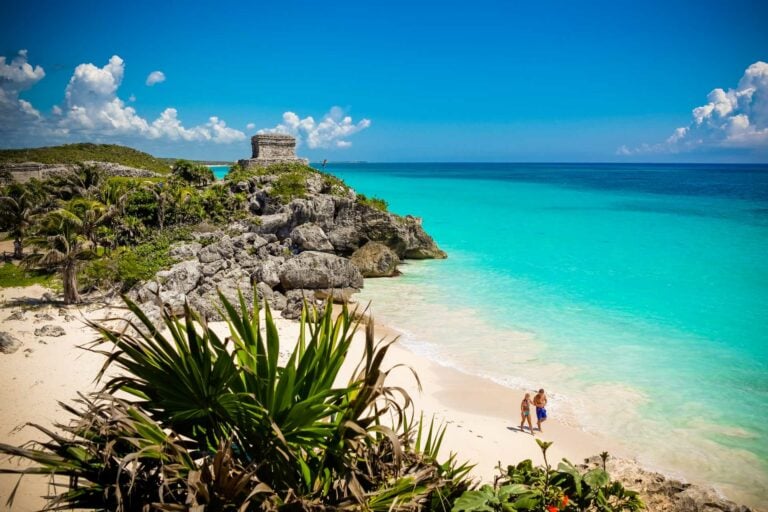
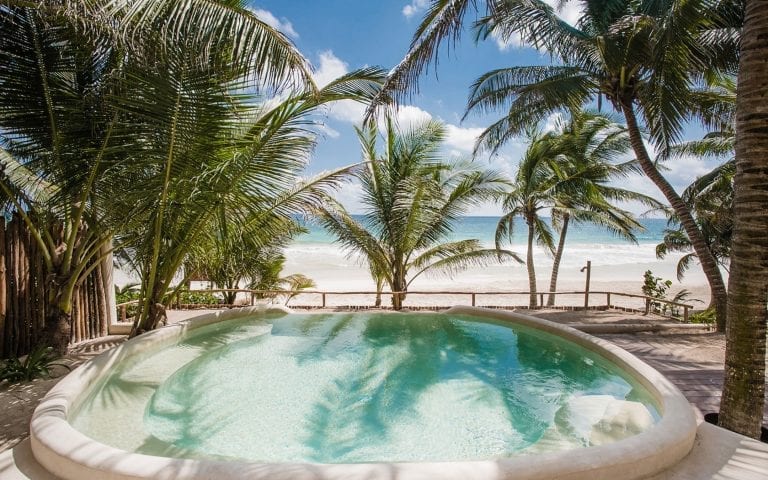
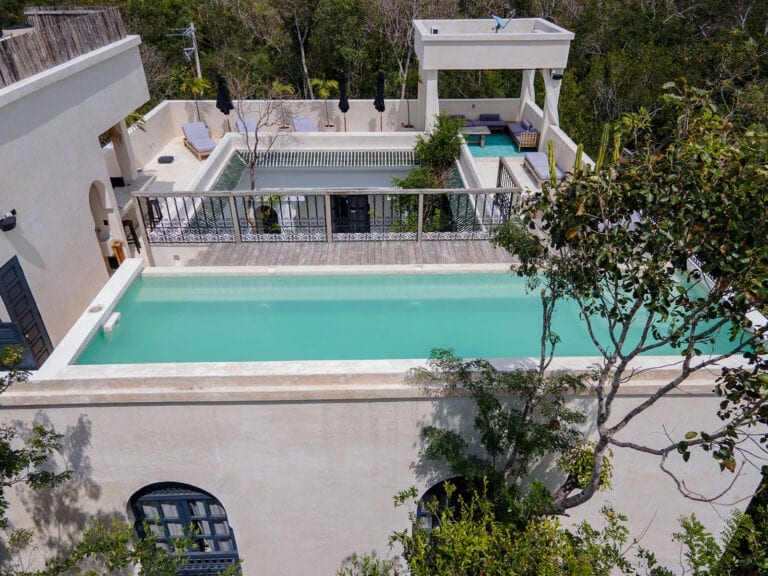
Tulum Archaeological Zone Guided Walking Tour
4.9 · 110 reviews on GetYourGuide
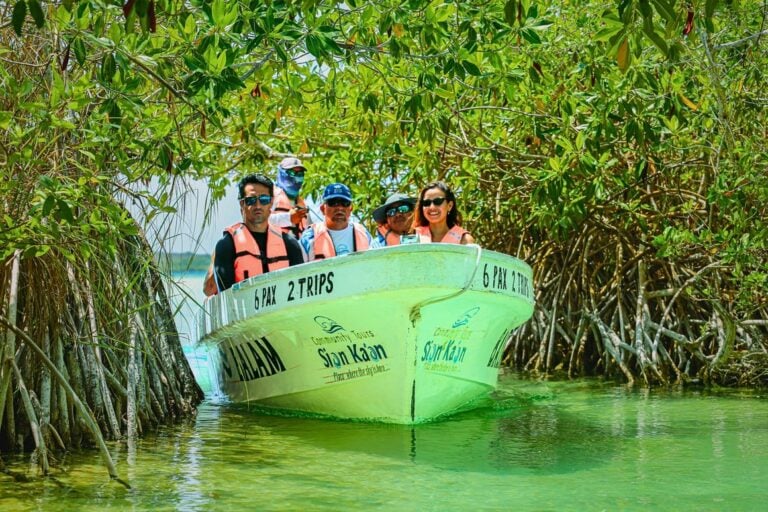
Sian Ka'an Reserve Ancient Maya Canals Tour
4.8 · 608 reviews on GetYourGuide
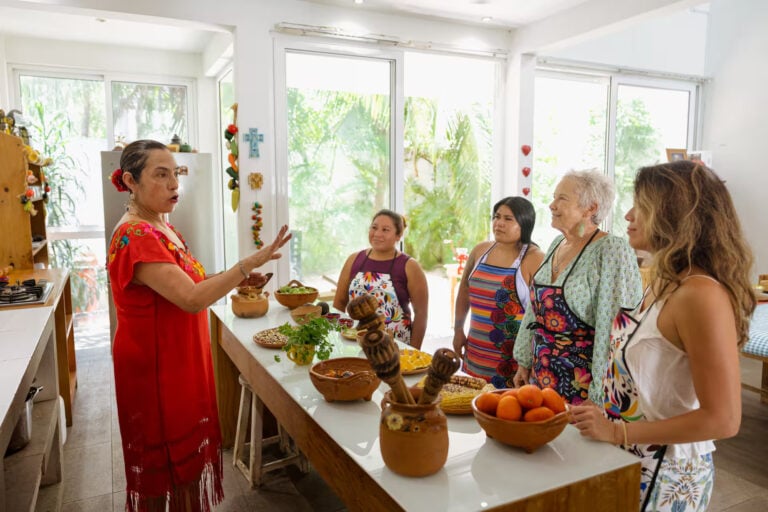
Mexican Cooking Class in a Local Home
4.9 · 61 reviews on GetYourGuide
Some links on this page are affiliate links: if you buy through them, Villa Experience may earn a small commission at no extra cost to you. We only list services we would use ourselves.
Tools for the trip
 Phone
Data from the moment you land
An eSIM for Mexico, installed before you leave. An alternative to roaming.
See Airalo → Our villa plan
Trip protection for your villa
Including Cancel For Any Reason. Buy within 14 days of your first payment.
See our villa plans → Peace of mind
Travel insurance, compared
Compare plans from many insurers for any Mexico trip.
Compare on Squaremouth →Some links are affiliate links: Villa Experience may earn a small commission at no extra cost to you.
Read next
Isla Mujeres for a Group: Three Houses, One Dock
Three beachfront houses side by side on the sheltered side of Isla Mujeres, let singly or as one estate for forty-eight. What the island is like with a group.