The white taxis sit nose to tail on the avenue through the pueblo, a pickup noses out of a side street, and three people are standing in the road deciding something. It is four in the afternoon and nothing is moving quickly. Twenty minutes later you are on the coast road with the windows down and the only traffic is a bicycle.
That is Tulum's transport problem in one scene. It is not that there is nothing; it is that there are three separate places here and the gaps between them are longer than people expect.
A note on the four hundred golf carts
This page used to be about a municipal plan to put four hundred electric golf carts on the streets of downtown Tulum.
We went looking for it, and we cannot find it. The Tulum municipality's own site does not mention it — not on the home page, not on its tourism index, not on its page of advice for visitors. The Quintana Roo state government's own site search returns nothing for carritos de golf, and neither does the state mobility institute's. The one official link the old story carried now returns an empty page.
So we are not going to keep repeating it. Golf carts are real in Tulum — several of our houses rent or provide one, further down this page — but a fleet of four hundred is not something any official source states today.
Here is how the town actually moves.
Three places with gaps between them
The Quintana Roo tourism board divides Tulum into three zones, and every transport decision follows from them: the archaeological site, the pueblo and the coast road.
The pueblo is the town — the avenue, the markets, the bus terminal, where people live. The coast road is the sixteen kilometres of hotels, beach clubs and restaurants running south from the ruins to the Sian Ka'an reserve. The board puts about ten minutes between the bus terminal in the centre and the coast road.
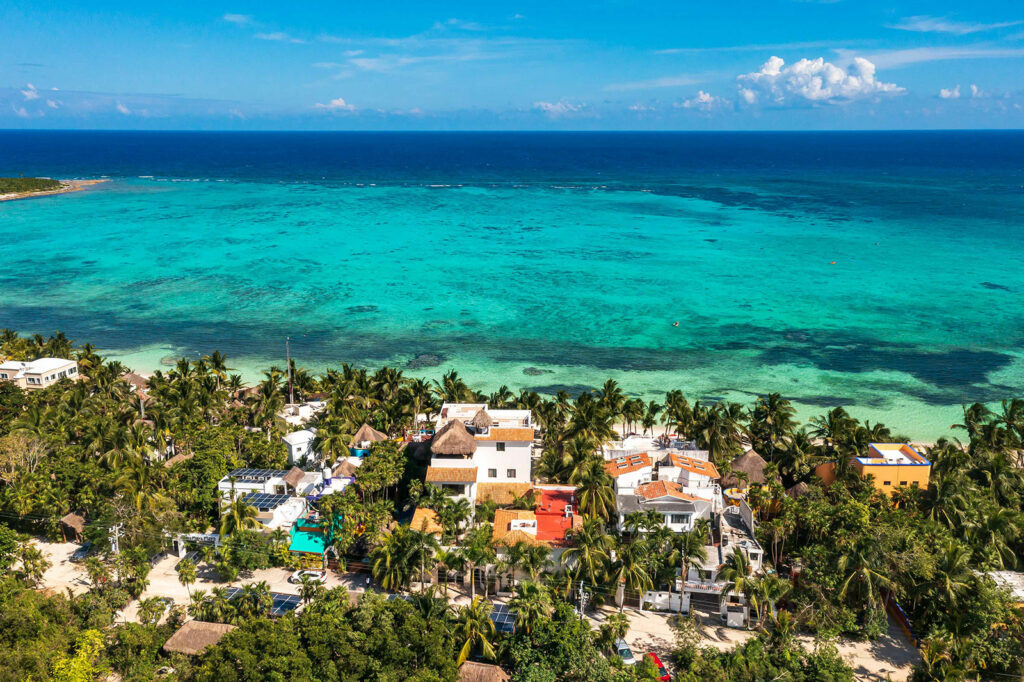
And then there is a fourth place that is not on the board's list but is very much on ours: the bays twenty minutes further north, Soliman and Tankah, where a lot of our best houses are. From a house on Soliman Bay it is 17.5 kilometres and about fifteen minutes into town, which the listing states plainly. From the beach road it is about eight. From Aldea Zama, on the edge of the pueblo, six.
None of those is a walk.
Taxis, and the one rule
Taxis are the default and they are everywhere, which is why the avenue looks the way it does at four in the afternoon.
We are not printing a fare. No Quintana Roo authority publishes a Tulum tariff that we could find. So the only useful advice is what everybody here already does: say where you are going, hear the number, agree it, get in. If it sounds wrong, say so and hear the next one — a normal conversation, not a confrontation. Carry small notes, and agree the return at the same time if you are going somewhere a cab will not be waiting, which on the coast road at midnight is most places.
Bicycles, which are the good part
Along the coast road the bicycle is the best way to move. The board notes rental bicycles at the bus terminal in the centre of the pueblo, and several of our houses solve it for you: Casa Ixchel includes four, and Cenote del Mar on Tankah Bay has them available. Between the pueblo and the beach, though, it is a real ride in real heat — four to eight kilometres depending where you start — so treat it as an outing rather than a commute.
The golf cart, properly
Carts exist here as a thing a house has or rents, not as a public service.
Villa Tulkal on the beach road offers golf cart rentals; Esencia La Mansion has one on the property. Further up the coast, Palm Villa Experience at Playa del Carmen provides one for moving around its community — which is how it covers the four kilometres to the beach — and Villa Azul Esmeralda at Puerto Morelos has one for resort access.
For a gated stretch of beach road a cart is the right vehicle: slow, open, nowhere to park a car anyway. For the drive into the pueblo it is not.
Buses, the train, and a hire car
The board records more than people assume. Buses run from Tulum airport to the Tulum terminal and on along the coast, and the terminal sits on the main avenue in the centre of the pueblo. Two Tren Maya stations serve the destination — one west of the pueblo, one at the airport — with local transport from either into the centre and out to the coast road.
On a hire car the board is unusually direct, and we agree: a rental is "útil para los cenotes, Cobá y la reserva de Sian Ka'an". That is exactly the right scope. Hire one for the two days you are going inland and park it the rest of the week; on the coast road a car is a parking problem.
The car the house calls
For arrivals, one vehicle beats four taxis. A private car from the airport is for your party only, in four sizes from a sedan for two to a van for ten, and runs the whole coast from Cancún down through Puerto Morelos, Playa del Carmen, Puerto Aventuras and Akumal to Tulum. Tulum's own airport is much closer — the board puts it about twenty-five minutes from the pueblo — which has changed the arithmetic of a short trip entirely. The full Tulum guide has the rest.
For the days afterwards, a driver by the hour is the one to book early. One driver, one vehicle, for as long as you need it — which for a dinner in the pueblo, a cenote morning and the festival nights in January is less trouble than anything else on this page.
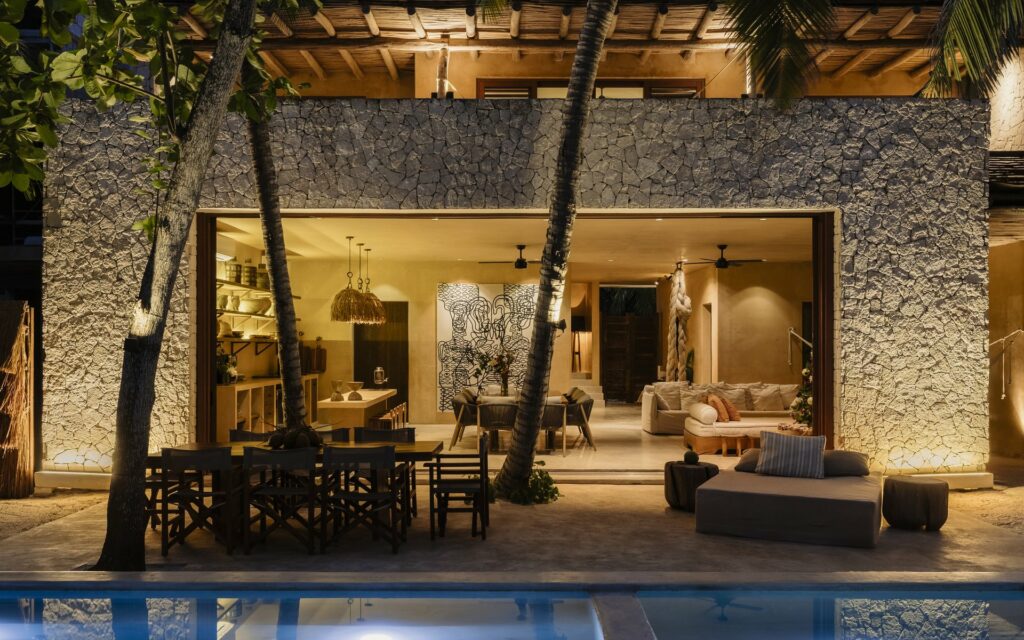
A few houses include the driver outright. Villa Tulumar on Tankah Bay lists chauffeur service on the same page as the chef and the housekeeping, with no extra-cost column at all.
Which one you actually need
Stay on the coast road, as at Zorba Estate where the restaurants are a minute's walk, and you will barely move: bicycles by day, a taxi for the one dinner in town. Stay at the bays, as at Villa Lol Beh Soliman, and you need a plan — a car or a driver, and town fifteen minutes each way, in exchange for water nothing passes. Stay in the pueblo and it is the opposite: everything on foot except the beach.
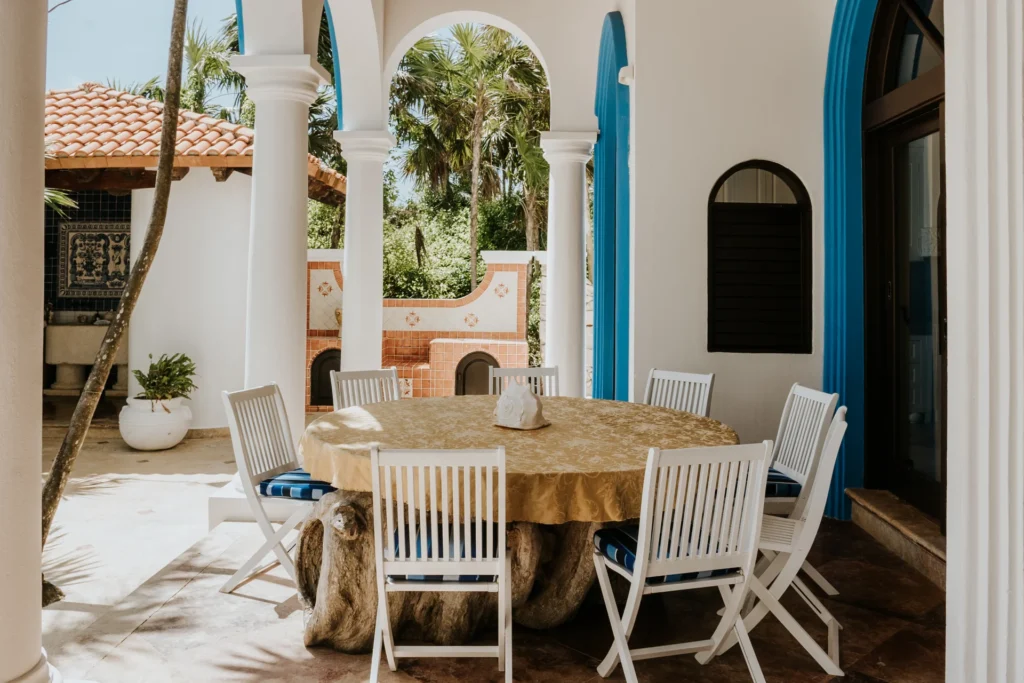
On a staffed house, most of this question dissolves. The house manager calls the car that is actually needed when it is needed, which over seven days is a handful of journeys rather than a hire agreement. What Tulum is known for is mostly within half an hour of wherever you are sleeping.
Start with our houses in the Riviera Maya and tell Alexa which of the three Tulums you are in; she will tell you whether you need the car.
Questions about Tulum
What happened to the 400 golf carts?
We went looking and could not find it. The Tulum municipality's own site does not mention it, and the Quintana Roo state government's and the state mobility institute's own site searches return nothing for golf carts at all. So this page is about how the town actually moves rather than about a programme we cannot stand behind. Carts are real in Tulum — several of our houses rent or provide one — just not as a fleet of four hundred.
How much is a taxi in Tulum?
We are not printing a number, because no Quintana Roo authority publishes a Tulum tariff that we could find, and the figures that circulate online are years old. Agree the fare before you get in, which is how the system works and what everybody does. If the number sounds wrong, say so and hear the next one.
Do you need a car in Tulum?
For a week on the beach road or at the bays, no. For cenotes, Cobá and Sian Ka'an, the state board itself says a rental car is the practical way to move, and we would agree — hire one for the two days you are going inland and park it the rest of the week. On a staffed house the house manager calls the car for the three or four journeys that actually need one.
Can you cycle in Tulum?
Along the coast road and around the pueblo, yes, and it is the best way to do both. The tourism board notes rental bicycles at the bus terminal in the centre, and several of our houses include them — Casa Ixchel has four, and bicycles come with the stay at a few others. Between the pueblo and the beach is a real ride rather than a stroll.
How do we get from Cancún airport to Tulum?
A private car is the simple answer for a group: our own transfer runs the whole coast, from Cancún and Costa Mujeres south through Puerto Morelos, Playa del Carmen, Puerto Aventuras and Akumal to Tulum, in sedans for two or four and vans for eight or ten. Tulum's own airport is much closer — the board puts it about twenty-five minutes from the pueblo — and there are buses from it to the Tulum terminal.

Three ways to spend a day

Sian Ka'an Reserve Ancient Maya Canals Tour
4.8 · 608 reviews on GetYourGuide
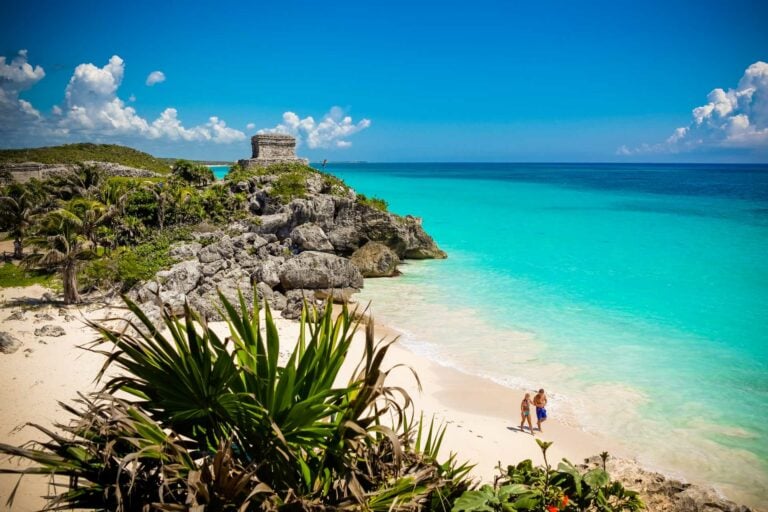
Tulum Archaeological Zone Guided Walking Tour
4.9 · 110 reviews on GetYourGuide
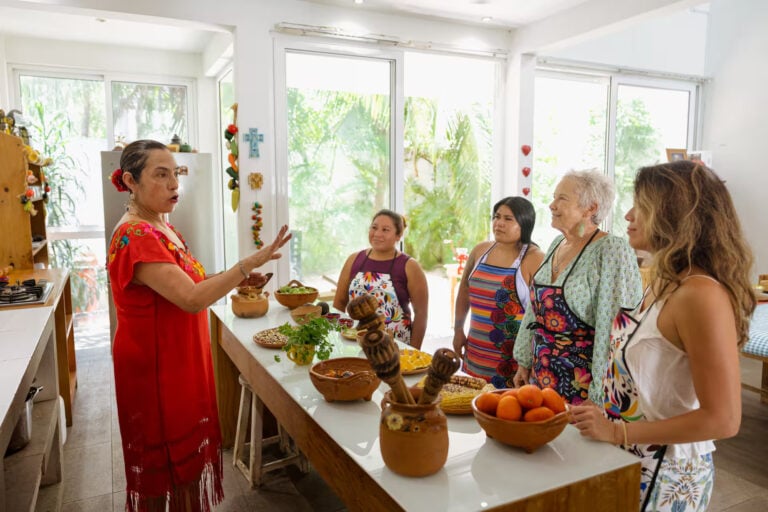
Mexican Cooking Class in a Local Home
4.9 · 61 reviews on GetYourGuide
Some links on this page are affiliate links: if you buy through them, Villa Experience may earn a small commission at no extra cost to you. We only list services we would use ourselves.
Tools for the trip
 Phone
Data from the moment you land
An eSIM for Mexico, installed before you leave. An alternative to roaming.
See Airalo → Our villa plan
Trip protection for your villa
Including Cancel For Any Reason. Buy within 14 days of your first payment.
See our villa plans → Peace of mind
Travel insurance, compared
Compare plans from many insurers for any Mexico trip.
Compare on Squaremouth →Some links are affiliate links: Villa Experience may earn a small commission at no extra cost to you.
Read next

Isla Mujeres for a Group: Three Houses, One Dock
Three beachfront houses side by side on the sheltered side of Isla Mujeres, let singly or as one estate for forty-eight. What the island is like with a group.