Villa Experience editors · Published February 2026 · Updated October 2026
At ten past eight the gate at the ruins has just opened, the paths are almost empty, and the iguanas still have the walls to themselves. An hour later they are not. Tulum rewards getting up early more than almost anywhere in Mexico, and that single fact explains more about the place than any list of attractions.
So: what is Tulum known for? Three things, and they have very little to do with each other.
A walled Maya port, on a cliff, facing the sea
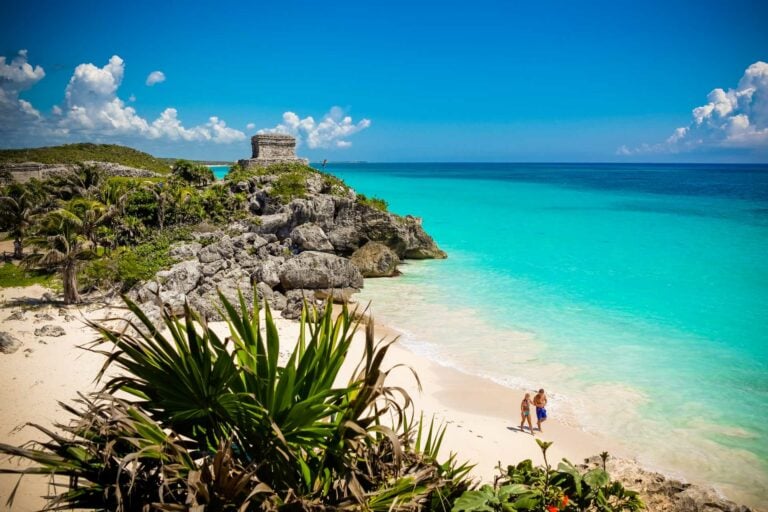
It is the only Maya city built on the edge of the sea — the Quintana Roo tourism board puts it exactly that way, and once you are standing there you understand why nobody else did it. The site is on a low limestone cliff with the Caribbean directly below and a wall around the other three sides.
The name is the wall. INAH's own page for the site records that Tulum means wall or palisade, and that the wall encloses the main complex north, south and west, with five entrances and two watchtowers.
It was a working port. The city's peak was the thirteenth to fifteenth centuries and it was still occupied when the Spanish arrived in the early sixteenth; it sat on the sea routes of the Caribbean coast, and from the top of the cliff its rulers watched the canoe traffic. The board adds the detail that makes the whole site click into place: El Castillo was probably also a lighthouse — a fire lit in the summit temple would have guided canoes through the one gap in the reef that protects this stretch of coast. You can see the gap from the path.
The other building everybody photographs is the Temple of the Descending God, with its stucco relief of a winged figure coming down head first, an image archaeologists associate with bees and with fertility. Its single doorway faces west.
One rule, and it disappoints people: you do not climb anything. INAH lists El Castillo, the Temple of the Descending God, the Temple of the Wind God, the Serie Inicial temples and the Casa del Cenote as closed to entry. You walk the paths and you look.
Sixteen kilometres of sand, and a road that got copied
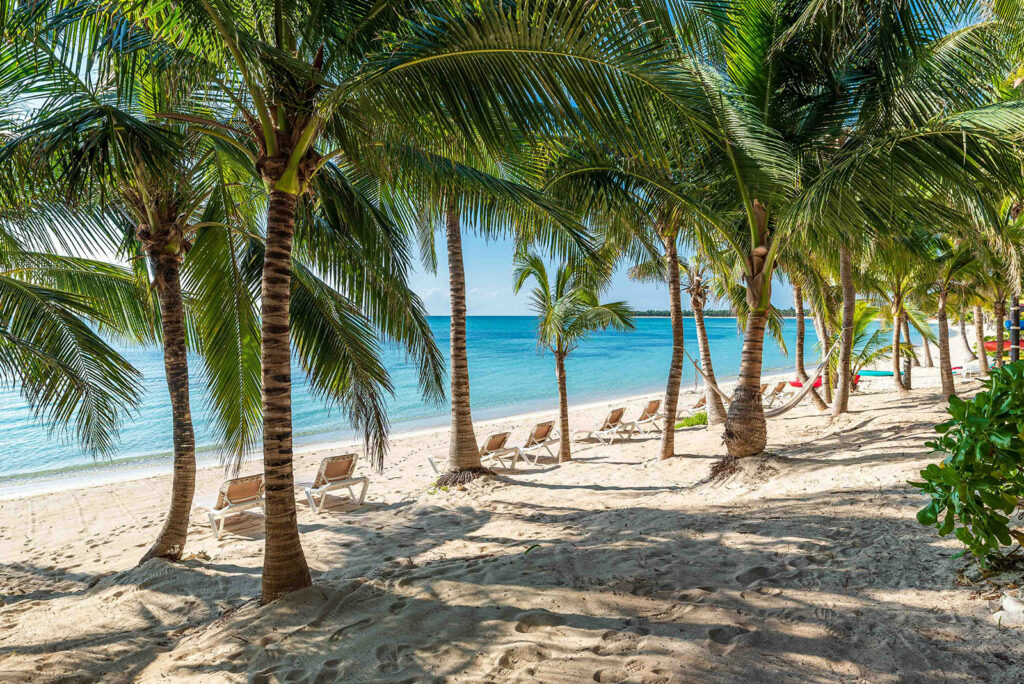
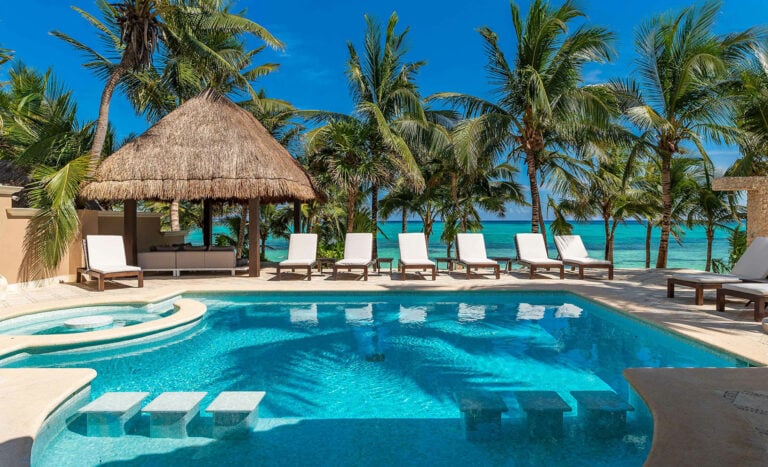
South of the site, sixteen kilometres of white sand run down to the Sian Ka'an reserve, and the coast road crosses them. The board's own description of what is along it — boutique hotels, glamping, beach clubs and restaurants with their feet in the sand — is also, more or less, a description of a style of travel that has since been copied far beyond Mexico.
That road is the second thing Tulum is famous for, and it is worth being plain about what it is: an arranged version of Mexico, built for visitors, very good at what it does. For everyday Mexico you go to the Pacific. For flat turquoise water and a beach club at four in the afternoon, this is exactly what it is for.
What the board says about the beaches is the part worth reading before you go. Since September 2024 the beaches beside the archaeological site — Playa Paraíso, Las Palmas, Santa Fe and Pescadores — have sat inside the Parque del Jaguar, a federal protected area, and the access arrangements have changed more than once since. As of November 2025 the board says there is free public access to the sand and the ticket pays only for the park's own museum, tower and paths. It also tells you to check the current rules before going, which is exactly what we would say.
Playa Ruinas, the cove directly under the temples, is entered through the site itself, so you need that ticket, and its wooden staircase closes seasonally — turtle nesting, rough sea, a park decision. Arrive early and have a second beach in mind.
The other water, which is underground
Tulum sits on top of one of the largest underground river networks on the planet. The board names three cenotes around the town — Dos Ojos, Gran Cenote, Calavera — and the Kaan Luum lagoon, and there are many more.
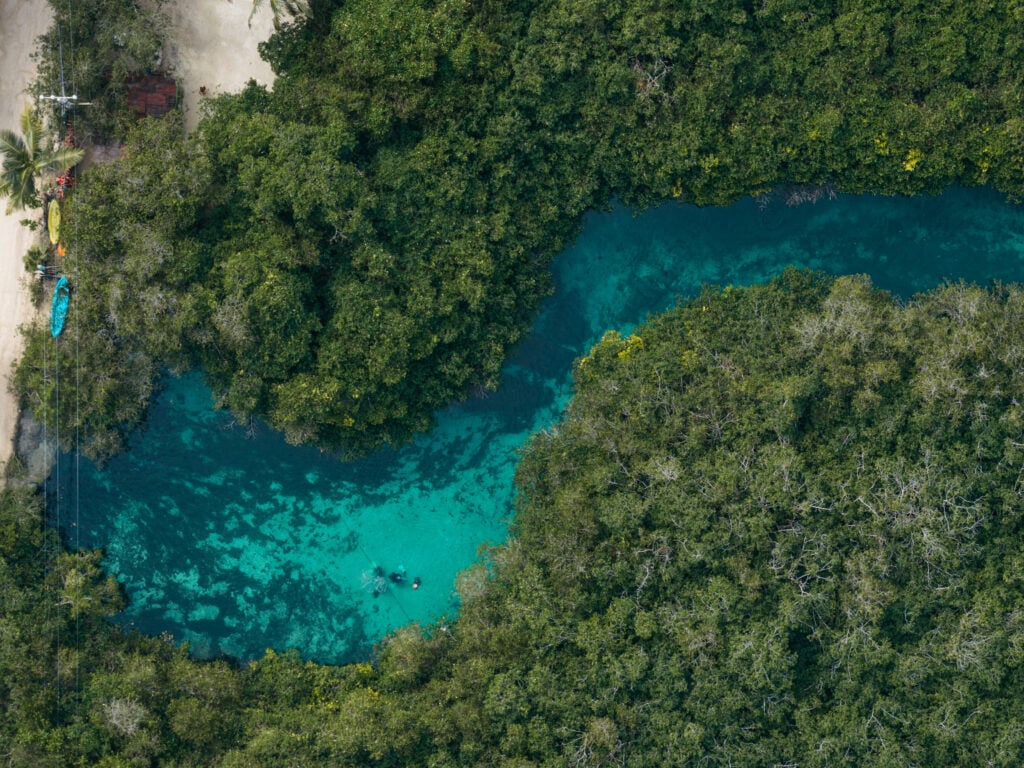
They are cold, they are extremely clear, and they are busy from mid-morning. Go at opening or go late. A few of our houses have one on the property, which solves the problem entirely: Casa Ixchel on the beach road has a private cenote with a two-storey deck and a mangrove boardwalk out to it.
Sian Ka'an, where the road stops
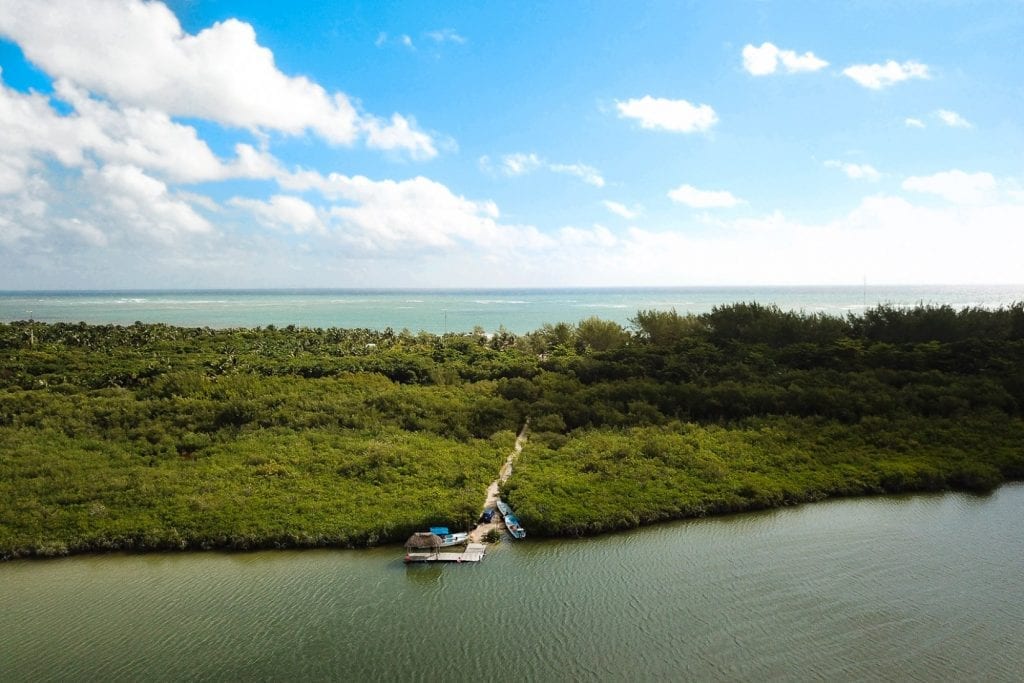
South of everything is the reason the coast road has an end. Sian Ka'an has been a federal protected area since 1986 and a UNESCO World Heritage site since 1987: 528,000 hectares of jungle, wetland, lagoon and reef, with jaguars, manatees, crocodiles and more than three hundred bird species recorded in it, and about six hundred people living inside.
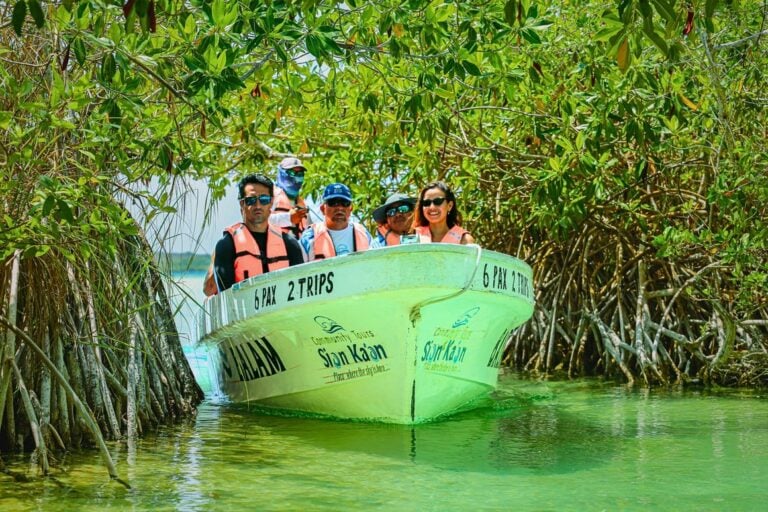
The board's own account of Sian Ka'an points at the thing to do: the canals beside the Muyil site, narrow channels the old Maya cut to link the lagoons with the sea as part of their coastal trade routes, which you can still travel. Boats also go from the fishing village of Punta Allen, and the reefs offshore are part of the Mesoamerican Reef, the second largest system in the world.
Its instruction for visitors is three words long and worth keeping: go slowly, go with a local guide, leave no trace. Access is accompanied and booked ahead, and the park charges to come in — one of our houses buys the tickets in advance for guests, which tells you how routine it is.
Three Tulums, and which one you sleep in
The board divides the destination into three zones — the site, the pueblo, the coast road — and that is exactly how our own houses fall.
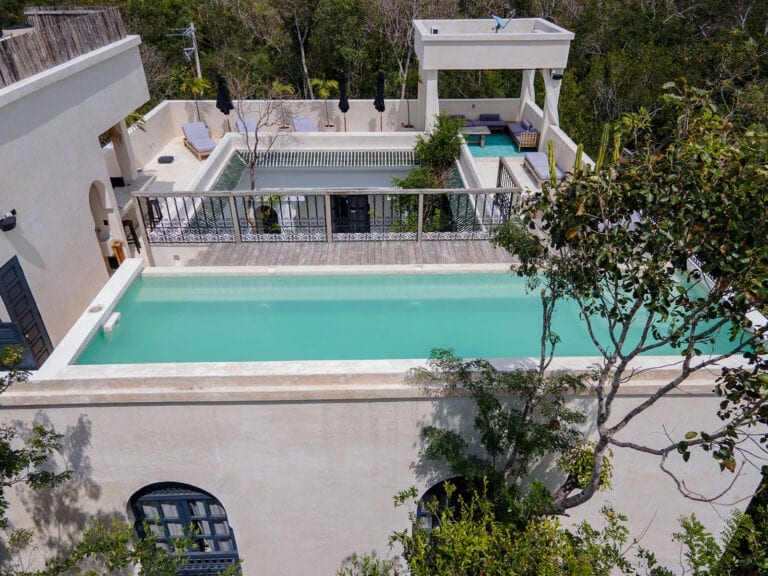
The pueblo and its edges. Aldea Zama and La Veleta, inland, where people actually live: markets, better food for less, and the beach a short drive. Hacienda Babylon is six kilometres from the centre with a fire pit in the courtyard.
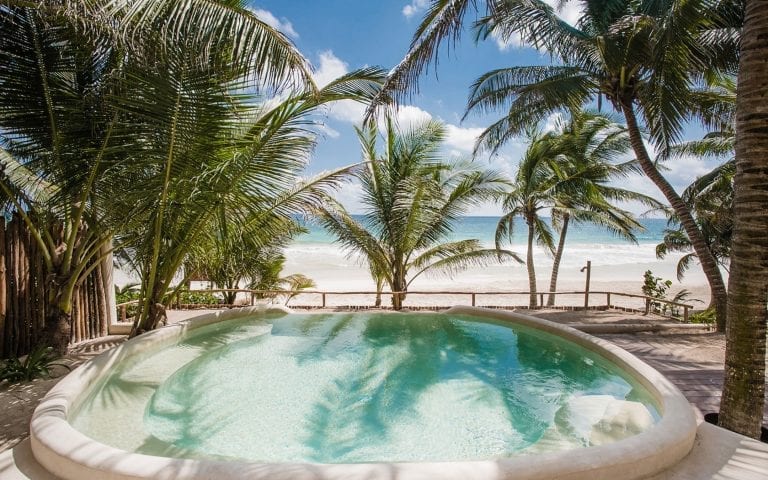
The beach road. In the middle of it, with the sand at the door. Zorba Estate has forty-four beds, the water fifteen metres away and restaurants a minute's walk — and it is slow to get out of, which is the trade.
The bays twenty minutes north. Soliman and Tankah, quiet, with almost no through traffic. Villa Lol Beh Soliman has its own stretch of that sand with the chef in the rate. If what you want from Tulum is the water rather than the scene, this is where to be.
We have 79 houses in Tulum, sixty of them on the sand. The full Tulum guide goes through getting there and when to come; how the town moves covers the rest; and if you are coming in January, the festival season is its own piece.
Some links on this page are affiliate links: if you buy through them, Villa Experience may earn a small commission at no extra cost to you. We only list services we would use ourselves.
The Riviera Maya and Tulum, in particular, have a lot of beach clubs along their white sandy beach. We have crafted a valuable guide to Tulum's greatest beach clubs using four different categories: family-friendly, relaxation-oriented, fabulous places to eat, and all-out party beach clubs.
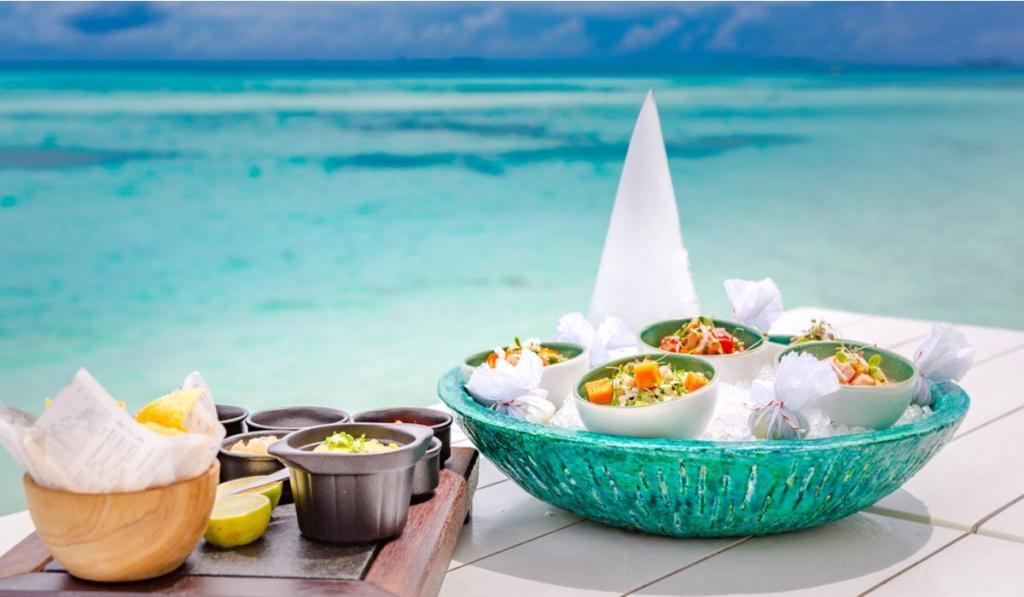
When you stay at a luxury villa in the Riviera Maya, you may want to have a special evening of fine dining and indulge yourself in one of the area's 5-star dining experiences. Indulging in the experience in the Riviera Maya is an unforgettable experience as you can savor dishes made by internationally awarded chefs.
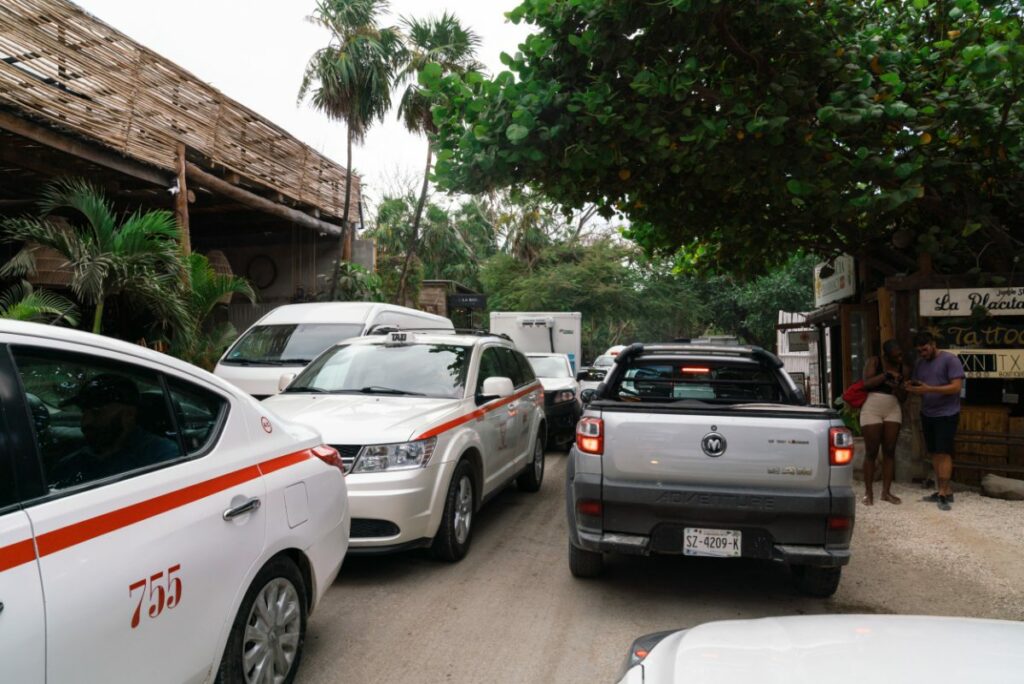
Tulum is three places with gaps between them. Taxis, bicycles, carts, buses, the train and a car — what each one is for, and why we print no fare.
February 2026
Frequently asked
What is Tulum most famous for?
The ruins, and then the beach road. Tulum is the only Maya archaeological site built on the edge of the sea — a walled port on a cliff — and sixteen kilometres of white sand run south from it into the Sian Ka'an reserve, lined with the boutique hotels and beach clubs that a great many other places have since copied.
What do the Tulum ruins actually mean?
Tulum means wall or palisade, after the wall that still encloses the main complex on three sides, with five entrances and two watchtowers. The city's peak was the thirteenth to fifteenth centuries and it was still occupied when the Spanish arrived. It worked as a trading port, and its rulers watched canoe traffic from the cliff; El Castillo was probably also a lighthouse, guiding boats through the gap in the reef.
Can you swim at the beaches below the ruins?
Sometimes. Since September 2024 Playa Paraíso, Las Palmas, Santa Fe and Pescadores sit inside the Parque del Jaguar, a federal protected area, and the access rules have changed more than once; the board says there is free public access to the sand as of November 2025. Playa Ruinas, the cove directly below the site, is entered through the archaeological zone and its staircase closes seasonally, so arrive early and have a second beach in mind.
Is Tulum the same as the Riviera Maya?
Tulum is in the Riviera Maya, at the southern end of it. The coast runs from Cancún down past Puerto Morelos, Playa del Carmen, Puerto Aventuras and Akumal to Tulum, and then stops at Sian Ka'an. The two airports that serve it, Cancún and Tulum, sit at opposite ends of the same road about 120 kilometres apart.
Where do you actually stay?
Three choices. The pueblo and its edges — Aldea Zama, La Veleta — where you are minutes from the centre; the beach road, where you are in the middle of the scene and slow to leave; or the bays twenty minutes north, Soliman and Tankah, where the reef is close in, the water is flat and almost nothing passes. We have 79 houses in Tulum spread across all three.
Share
A
AlbrietReservation ManagerHi — how can I help plan your stay?
Planning a stay? Our concierge is here to help.
Albriet
Reservation Manager · typically replies in minutes