Villa Experience editors · Published February 2026 · Updated October 2026
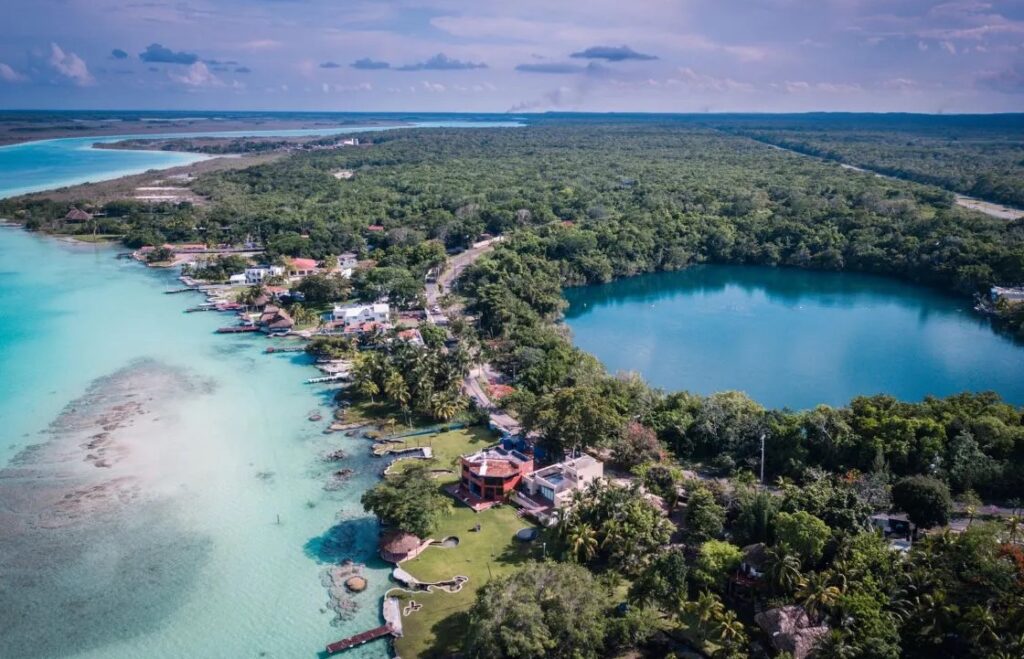
The lagoon does its trick at about half past seven in the morning, before the wind gets up. The water is flat, the light comes in low across it, and the blues separate — pale, then turquoise, then a band of something closer to navy where the floor drops away. An hour later a breeze has broken the surface and it is one colour again, a very good one, but one.
That is why people who have been tell you to go early, and it is why Bacalar is a strange sort of day trip. The thing you came for happens at dawn.
Why it is seven colours
The Quintana Roo tourism board describes it without any decoration, which is the best description there is: a lagoon running forty-odd kilometres in front of a Pueblo Mágico of quiet streets, the water fresh, warm, and so clear the bottom shows from the surface.
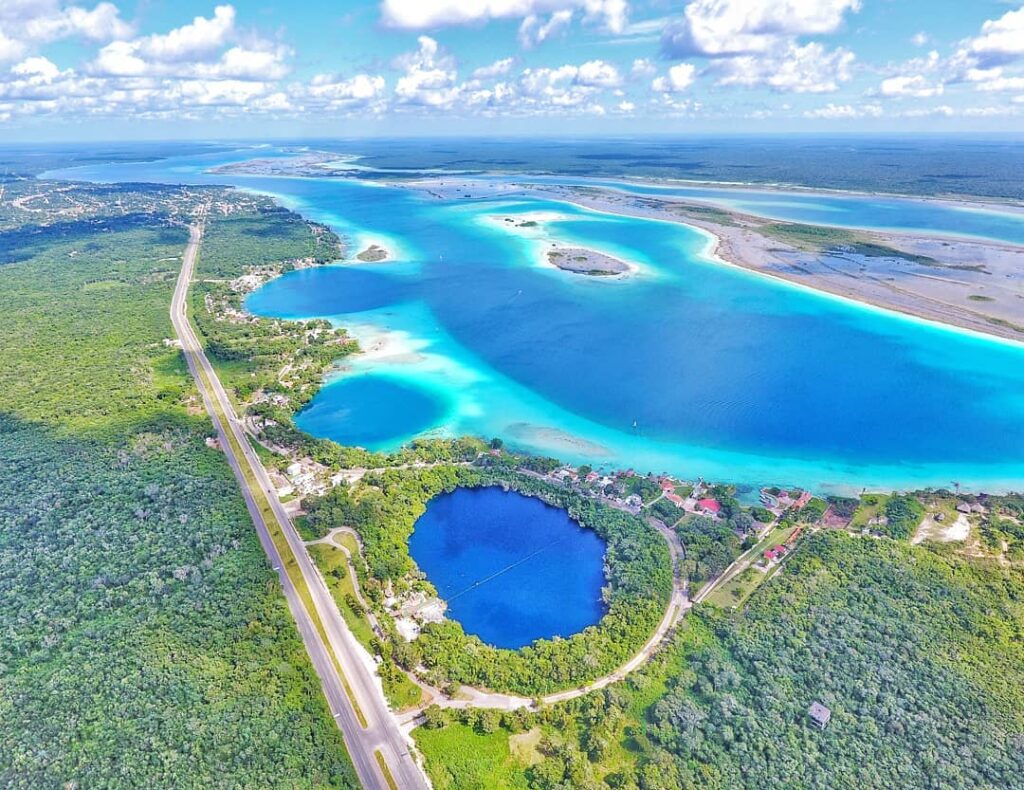
The colours are depth and a white floor. The board's own article on the lagoon puts it exactly that way: the shades come from how deep the water is and how cleanly the white limestone bottom reflects the light. Shallow over white reads pale sky; a few metres further out, where the floor falls off, it reads navy. Nothing is dyed and nothing is unusual in the chemistry. It is a very clean lake over very white stone.
It is also fresh water, which surprises people who arrive expecting another piece of the Caribbean. There is no reef, no salt and, the board notes, no strong currents — which is the quiet reason it suits a family with small swimmers in a way the open sea on this coast does not always.
The one instruction
Along the Canal de los Piratas the banks are soft clay, and you will see visitors scooping it up and painting it onto themselves. The board's own page asks you not to, and explains why in a sentence worth carrying: the lagoon's water and its stromatolites are extremely fragile, and the clay, the sunscreen and the insect repellent that swimmers release are among the biggest threats to them.
The stromatolites are the point of the whole place, and almost nobody arrives knowing it. They are structures built up by microbial life over a very long time — the board calls them among the oldest forms of life on the planet — and they grow along the shores of the lagoon and its cenotes, looking like nothing much, like pale rock shelves just under the water.
So: swim, float, paddle. Go in without the clay. Use biodegradable sunscreen sparingly, or skip it and wear a shirt. Leave the banks as you found them. It takes nothing away from the day and it is the single thing the people who look after this lagoon ask of visitors.
Cenotes inside a lagoon, and the pirates' canal
The geography here is odd and worth understanding before you get in a boat.
Bacalar has cenotes inside the lagoon — deeper natural shafts within the body of the water itself. The board names Cenote Esmeralda and Cenote Negro as the best known, and says the easy way to reach them is by boat or kayak. The water over them is much deeper, and the colour changes hard at the rim, which is where several of the seven blues come from. The Cenote Azul sits beside the lagoon rather than in it, on the other side of the road, deep and almost black from above.
The Canal de los Piratas is the narrow channel at the north end. Local history, as the board tells it, has pirates and smugglers using it in the seventeenth and eighteenth centuries to get to Bacalar after the dyewood the region traded in. The Fuerte de San Felipe, eighteenth century, still stands in the town and was built for exactly that reason.
Kayak and paddleboard are the way to see all of it on your own clock, and the board's advice matches what anybody who lives there will tell you: first thing in the morning, or the last of the afternoon, when the lagoon is calm.
How a day trip from the coast actually goes
Here is the part other guides will not tell you straight. Bacalar is a long way south. Neither the state board nor any of our own pages publishes a drive time from Tulum, so we are not going to print one — but it is far enough that the honest options are a dawn start and a late return, or a night down there.
If you are flying in for Bacalar specifically, the nearest airport is Chetumal, 38 kilometres from the lagoon with a transfer of about forty minutes, and the Tren Maya stops fifteen minutes outside the town.
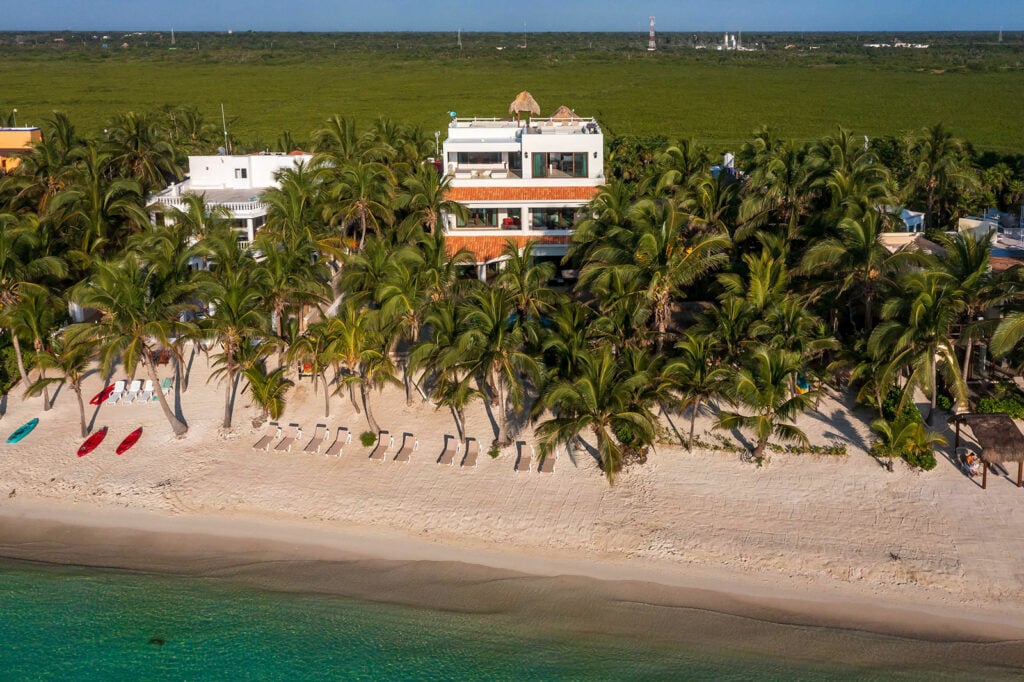
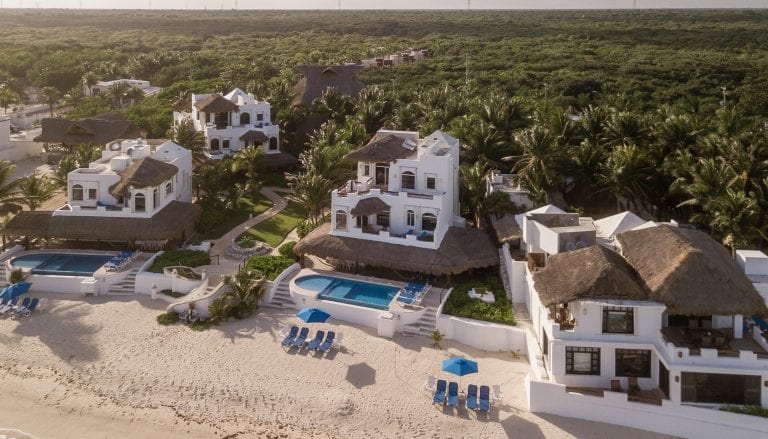
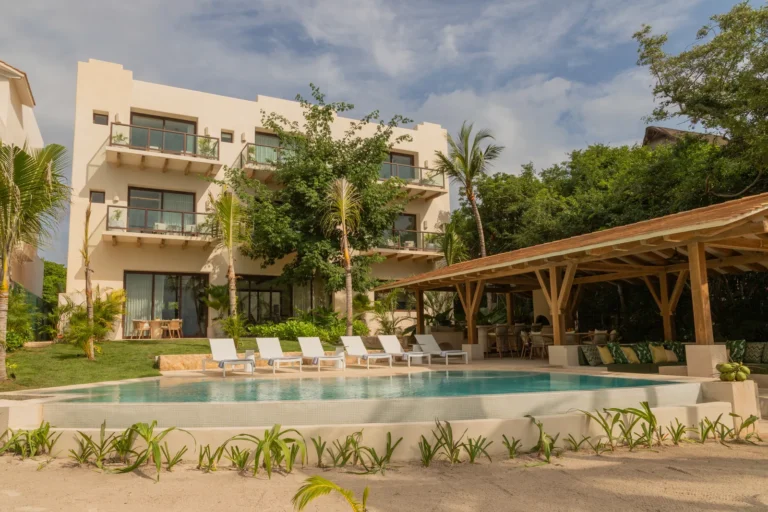
If you are already on the coast, this is the day to take a driver for the day rather than hire a car — one vehicle, one driver who waits while you are on the water, and nobody responsible for the road home after a long day in the sun. From a house on Soliman Bay like Villa Lol Beh Soliman, or from Hacienda del Secreto up at Playa del Secreto, that is one long day out of a week, and a good one.
Leave in the dark. Be on the water by eight. Eat in the town at one of the open-air tables on the shore — the board describes the cooking as southern Quintana Roo's own, which is a different thing from the coast's. Go back out at five if you have the energy.
And if the drive sounds like too much, it may well be: the board also puts Chacchoben, Ichkabal, Dzibanché and Kohunlich within an hour or less of Bacalar, which is an argument for two nights rather than one day, and Sian Ka'an is very much closer to the three zones of Tulum if what you actually want is a morning on still water with birds.
When to come
The board gives November to March for the seven colours, which is also the drier, cooler half of the year here. The rest of the year the lagoon is still the lagoon; it rains in the afternoon rather than all day, and the town is emptier.
Within any day of any month, the answer is the same and it is the only tip on this page that matters: be on the water early.
Some links on this page are affiliate links: if you buy through them, Villa Experience may earn a small commission at no extra cost to you. We only list services we would use ourselves.
The Riviera Maya and Tulum, in particular, have a lot of beach clubs along their white sandy beach. We have crafted a valuable guide to Tulum's greatest beach clubs using four different categories: family-friendly, relaxation-oriented, fabulous places to eat, and all-out party beach clubs.
When you stay at a luxury villa in the Riviera Maya, you may want to have a special evening of fine dining and indulge yourself in one of the area's 5-star dining experiences. Indulging in the experience in the Riviera Maya is an unforgettable experience as you can savor dishes made by internationally awarded chefs.
Tulum is three places with gaps between them. Taxis, bicycles, carts, buses, the train and a car — what each one is for, and why we print no fare.
February 2026
Frequently asked
Why is Bacalar called the Lagoon of Seven Colours?
Because of depth and a white floor. The Quintana Roo board explains it plainly: the colour changes with how deep the water is and how clearly the white limestone bottom reflects the light, so the same lagoon runs from pale sky blue to deep navy within a few metres. It is fresh water, not sea.
Can you swim in Bacalar?
Yes, and the board describes it as one of the things to do there — warm, shallow near the shore, deepening gradually, with no strong currents, which it says makes it good for families and casual swimmers. What it asks is that you go in without clay, and with biodegradable sunscreen used sparingly or none at all.
What are the stromatolites?
Mineral structures built by microbial life, among the oldest forms of life on the planet, and they live along the shores of the lagoon and its cenotes. The board names them as the reason for the rules: they are extremely fragile, and the clay, sunscreen and repellent swimmers release are among the biggest threats to them.
How long is the drive from Tulum?
Neither the state tourism board nor any of our own pages publishes a figure, so we are not going to invent one — but it is a long way south, far enough that it is a dawn start and a late return, or a night in Bacalar. The nearest airport is Chetumal, 38 km from the lagoon with a transfer of about forty minutes, and there is a Tren Maya station fifteen minutes outside the town.
When are the colours best?
The board gives November to March for the seven colours, which is also the drier half of the year. Within the day it is the morning: the lagoon is calmest early, which is when the paddlers go out and when the surface actually reads as seven different blues rather than one.
Share
A
AlbrietReservation ManagerHi — how can I help plan your stay?
Planning a stay? Our concierge is here to help.
Albriet
Reservation Manager · typically replies in minutes