The colour arrives at the worst possible hour. At eight in the morning the ponds are a washed-out pink, barely worth the drive. At one in the afternoon, with the sun straight overhead and no shade anywhere on the north coast of Yucatán, they are the shade of a grapefruit. Everybody who has been tells you to come in the hard light, which is the opposite of every other piece of photography advice in Mexico.
That is the first honest thing about Las Coloradas. Here is the second: you do not get in.
What it actually is
Las Coloradas is not a lagoon in the sense people expect, and it is not a nature site. It is a working salt plant.
The Yucatán tourism board is unambiguous about it. The ponds sit inside a private area belonging to the Salinera de Yucatán. Access is permitted — you can go and look — but the board states, in the same sentence, that the water is not suitable for swimming, for two reasons it gives in order: swimmers would contaminate the water and affect the salt production, and the mineral concentration and the water temperature are what they are.
The pink comes from the process. Sea water is let into shallow pans and left to evaporate; as the brine concentrates, the microorganisms and brine shrimp that live in it colour the water, pale rose at the shallow end and something closer to red where it is almost dry. The board describes the surrounding country as protected reserves where the fresh water of the rains meets the salt water of the sea, which is also the reason the birds are here.
So what you do is walk the causeways, look, and take the photograph everybody comes for — from the edge.
The better half of the day is twenty minutes away
If Las Coloradas is the photograph, Río Lagartos is the morning.
The board's page on Río Lagartos describes a boat tour of about four hours through an estuary that runs more than eighty kilometres across three municipalities — San Felipe, Río Lagartos and part of Tizimín — with the pink flamingo as its reason to exist, and white herons, cormorants, storks and crocodiles along the way. The village of San Felipe is twelve kilometres from Río Lagartos; Las Coloradas is twenty minutes the other way.
The board's advice is to go with one of the specialised local agencies, because they know the best hours for the birds, and to book in advance. We would add only that this is not advice to skim: the flamingos are where the guides say they are on a given morning, and that is not knowledge you can get off a map.
CONANP's own record of the reserve puts the scale on it. Ría Lagartos is a Reserva de la Biosfera of 60,347 hectares across Yucatán and Quintana Roo, a Ramsar wetland and a UNESCO Man and the Biosphere site, with nearly seven thousand people living inside it. Its list of representative species opens with the flamingo, Phoenicopterus ruber, and includes the Morelet's crocodile, the jaguar, the ocelot and the spider monkey. There is a second, smaller protected area beside it — Playa Ría Lagartos, a sanctuary of 827 hectares — covering the beach itself.
One thing we are not going to tell you is when to come for the flamingos. Neither the state board nor CONANP publishes a season, and we are not going to invent one. Ask the agency you book with; they will tell you what this month looks like.
The real shape of the day
Here is where most guides quietly mislead, so we will be blunt.
Las Coloradas is not on the Riviera Maya. It is on the north coast of the Yucatán peninsula, facing the Gulf, a different coast from the Caribbean entirely. No official source and none of our own pages publishes a drive time from Tulum or Playa del Carmen that we could stand behind, so there is no figure on this page. What we can tell you is the shape: it is a dark start and a late return, and the hours in the car are the thing people underestimate.
So there are two versions.
The long day. Leave before light with a driver for the day rather than a hire car, so that nobody in the group is responsible for the road home after eleven hours and a lot of sun. Boat at Río Lagartos in the morning, lunch in the village, the salt ponds at midday when the colour is up, and back.
The loop. Better, and what we suggest: a night inland and a proper circuit — the colonial towns and the inland sites on the way out, Río Lagartos and the salt ponds the next morning, and the coast on the way back. Two days instead of one, and the car time stops being the main event.
What does not work is tacking it onto a day that already has something else in it.
Where you come back to
This is a day trip, which means the house is the thing that makes it bearable — somewhere you can leave at five in the morning without organising breakfast, and come back to at nine at night without organising dinner.
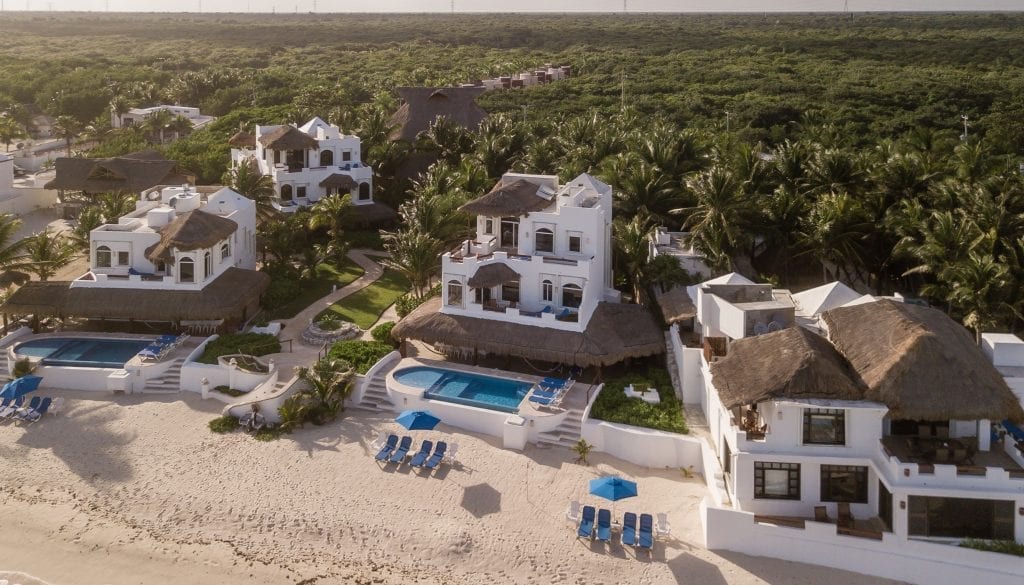
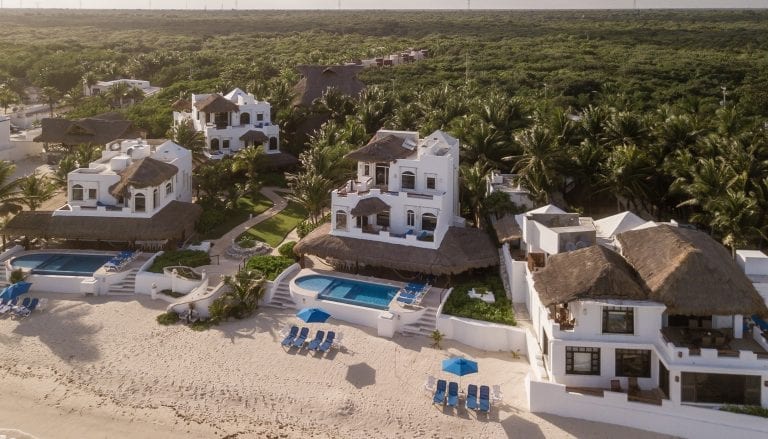
Casa Priakos on Soliman Bay is the shape of house that suits this kind of week: five bedrooms, on the sand, with the chef cooking three meals between eight and eight, so an early start is somebody else's problem.
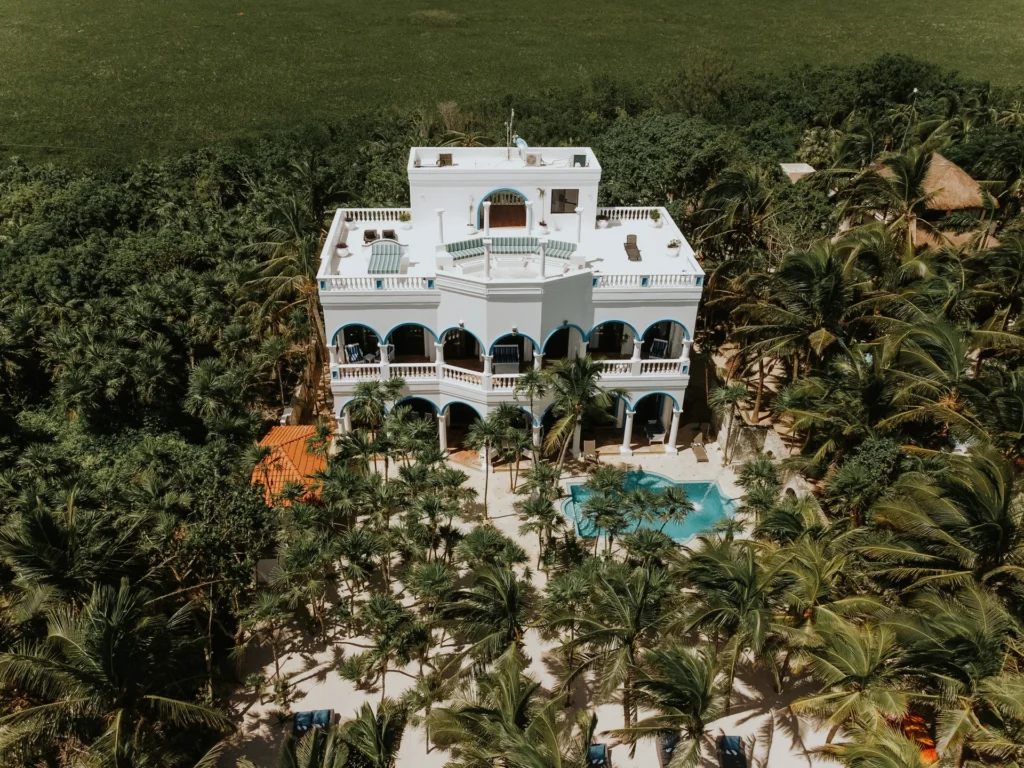
For a group, Hacienda del Secreto at Playa del Secreto sits twenty to thirty minutes from Cancún airport, which also makes it the shortest start on this coast for a long inland day — twenty-seven bedrooms, a private chef and kitchen staff, and sixty-three people fed whatever time they get back.
And if the drive sounds like more than the week has room for, it may well be. Bacalar is the other long one, in the opposite direction; what Tulum is known for is mostly within half an hour of the house; and what else is worth the drive sets them against each other.
Start with our houses in the Riviera Maya, and if you want the flamingos, tell Alexa early — the boat is booked in advance and the house will do it for you.
Questions about Riviera Maya & Tulum
Can you swim at Las Coloradas?
No. The Yucatán tourism board says it plainly: the ponds sit inside a private area belonging to the Salinera de Yucatán, access is permitted, but the water is not suitable for swimming — first because swimmers contaminating it would affect salt production, and second because of the high mineral concentration and the water temperature. Photographs of people standing in it predate the rule, or ignore it.
Why is the water pink?
It is a working salt operation. Sea water is let into shallow ponds and allowed to evaporate, and as the brine concentrates the microorganisms and brine shrimp that thrive in it turn the water from pale rose to deep red. The board describes the wider area as protected reserves where rainwater and sea water meet. The colour is strongest under hard midday light, which is the opposite of most photography advice.
Where are the flamingos?
At Río Lagartos, twenty minutes away, which is the better half of the day. CONANP records Ría Lagartos as a biosphere reserve of just over 60,000 hectares, a Ramsar wetland and a UNESCO Man and the Biosphere site, with the flamingo among its representative species alongside the Morelet's crocodile and the jaguar. The tourism board says to go with one of the local agencies, because they know the hours, and to book ahead.
What month should we go for the flamingos?
Neither the state board nor CONANP publishes a season, so we are not going to invent one. What the board does say is that the local guides know the best schedule for bird watching, which is the real answer: ask them when you book, rather than planning a trip around a month you read somewhere.
Is it a day trip from the Riviera Maya?
It is a very long one, and nobody official publishes a drive time we could use, so we will not print one. It is on the north coast of Yucatán, a different coast from the Caribbean. The honest options are a dawn start with a driver, or a night in Río Lagartos or Valladolid and a proper two-day loop, which is what we suggest.
Three ways to spend a day
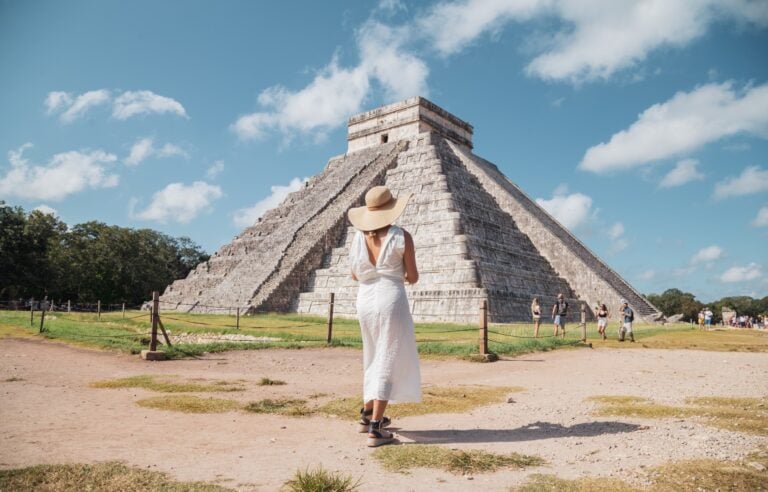
Chichen Itza with Valladolid and a Cenote
4.6 · 1,237 reviews on GetYourGuide

Buggy and Cenote Tour from Playa del Carmen
4.8 · 396 reviews on GetYourGuide
Sian Ka'an Boat Trip with Lunch
4.8 · 324 reviews on GetYourGuide
Some links on this page are affiliate links: if you buy through them, Villa Experience may earn a small commission at no extra cost to you. We only list services we would use ourselves.
Read next
Isla Mujeres for a Group: Three Houses, One Dock
Three beachfront houses side by side on the sheltered side of Isla Mujeres, let singly or as one estate for forty-eight. What the island is like with a group.