The water is the temperature of a swimming pool nobody heats and there are stalactites a metre above your head. Somewhere behind you the roof has fallen in and a column of daylight is coming down through it, green at the edges, and the fish in the shaft are not bothered by anybody. You drove twenty-five minutes from a house with a cook in it to get here.
That is the version of Mexico's wonders worth writing about: the ones you can reach from where you are staying, on a morning, and be back for lunch. Most lists of Mexican wonders are a geography lesson. This one is a shortlist of places that are actually an afternoon from one of our houses, and an honest note about the famous ones that are not.
The cenotes, and which ones anyone will tell you about
A cenote is a hole in limestone where the roof has collapsed and the groundwater is showing. Quintana Roo's tourism board calls the Yucatán's one of the largest networks of underground rivers on the planet, and names three it is happy to send you to — Dos Ojos, Gran Cenote and Calavera — plus the Kaan Luum lagoon.
That is the whole official list, and it is worth noticing what is not on it. There are hundreds of cenotes between Playa del Carmen and Tulum, some of them on private land with a turnstile and a car park, some of them at the end of a track. Nobody can tell you which was good last Tuesday; the house manager can, because somebody he knows went.
If you want the easy version, a day pass to a group of five of them gets you changing rooms, lifejackets and no decisions to make, which with children is the entire argument. Otherwise ask the house, and read the cenotes section of our Tulum guide before you go.
Cobá, and the one pyramid you can still climb
Forty-seven kilometres inland from Tulum, Cobá is spread over about seventy square kilometres around five lakes — which means you walk or cycle between the groups of buildings rather than standing in one plaza. INAH's own translation of the name is rippled water, after the lakes.
What makes it the best morning of the three is one line on INAH's page. Access to the Nohoch Mul pyramid runs from eight until half past three, in groups of a maximum of fifteen people, for up to fifteen minutes at the top. It is the only major structure on this coast you may still go up, and the rule is why it is still open.
The other thing Cobá has is its roads. The Maya built more than fifty raised stone causeways out of it between 600 and 800 AD, called sacbé, white road; the longest runs a hundred kilometres to Yaxuná, near Chichén Itzá. Standing on one is the moment the site stops being ruins and becomes a city.
Chichén Itzá, and the ticket nobody warns you about
Two and a half hours from Tulum, so a full day rather than a morning, and worth it once.
INAH translates Chichén Itzá as the city at the edge of the Itzáes' well, dates the city 525 to 1200 AD and records that it was the capital of a wide territory under the league of Mayapán from 987 to 1200. Gates open at eight, last entry at four, and the Serie Inicial group — old Chichén — is closed for now.
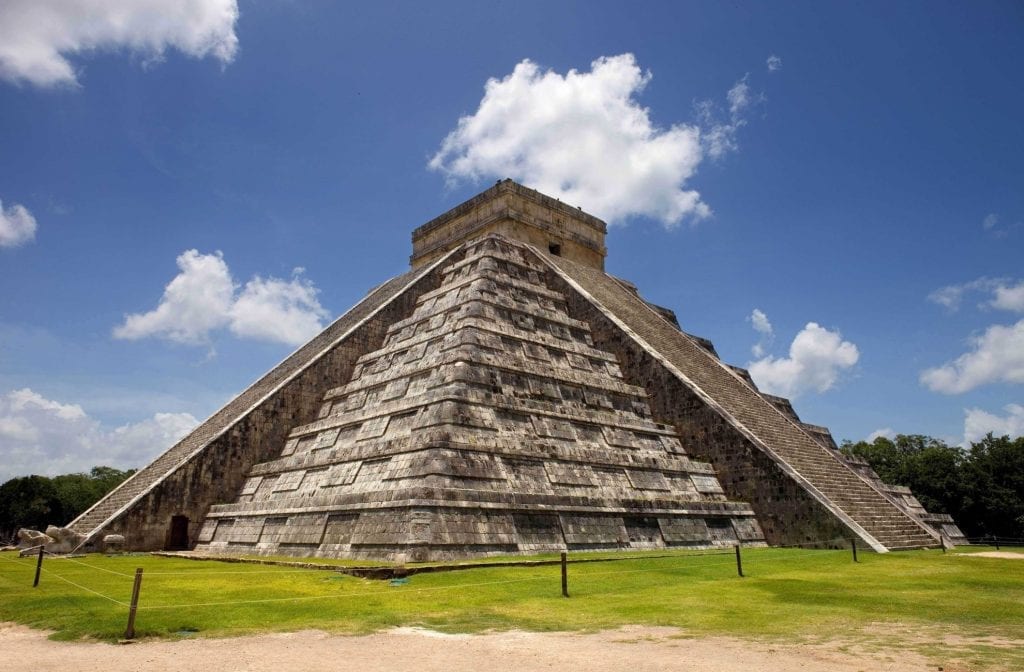
The thing to know before you go is the money. You buy two tickets at the same window: INAH's own, and a second, several times larger, levied by the state of Yucatán. The current figures for both are on INAH's page, and the only surprise is to people who budgeted for one ticket.
Go at opening. INAH's own description of the equinox — the sun climbing and lighting the western balustrade of El Castillo so that triangles of light and shadow appear to run down to the serpent's head at the bottom — is the most precise sentence anybody has written about that building, and it is the reason the first hour is different from the fourth.
Tulum's own ruins, twenty minutes from the beach road
Tulum's own ruins are the only Maya site built on the edge of the sea, and the Quintana Roo board's advice is one line long: arrive at opening time.
INAH says the modern name means wall or palisade, after the one that still stands on three sides, with five entrances and two watchtowers; the fourth side is the Caribbean and needs no wall. El Castillo is the tallest thing there and is built off the cliff itself. The Temple of the Descending God carries the city's principal image, a figure coming down head-first. You look at all of it from the paths; El Castillo and four other structures are closed to entry.
Sian Ka'an, and what protection actually looks like
South of the beach road, sixteen kilometres of white sand run down to a boundary, and on the far side of it there is almost nothing for a hundred kilometres.
Sian Ka'an was decreed a biosphere reserve on 20 January 1986: 528,147 hectares, about 375,000 of land and lagoon and 153,000 of sea, with three core zones and six hundred and thirty-four people living inside it. Together with two neighbouring protected areas it makes a complex of 652,000 hectares under one management plan.

What that means for a week in a house is that the coast simply stops. You can go in by boat through the canals, and the turtles are on the Akumal and Tulum beaches from May to October whether anybody books anything or not.
The Pacific: two islands and a coast with no road
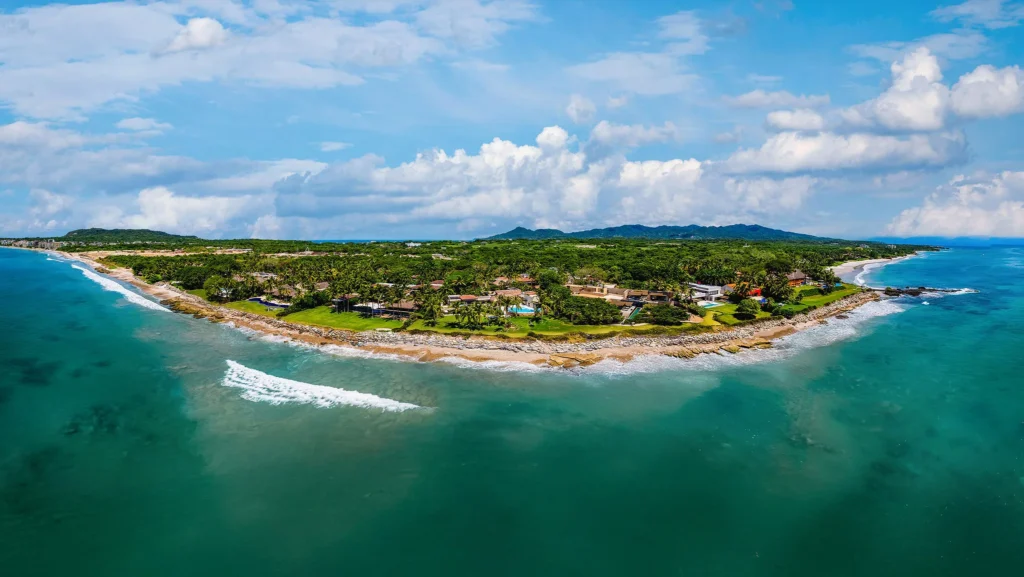
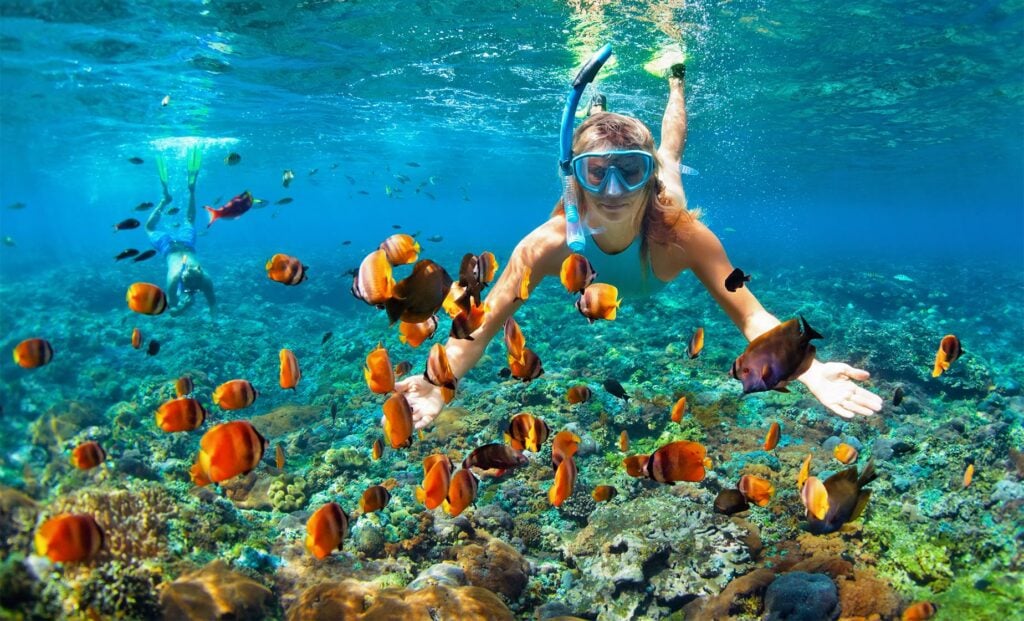
Off the end of the Punta Mita peninsula, the Marietas have been a national park since April 2005 — two islands, Redonda and Larga, plus two islets. CONANP lists them as a Ramsar wetland since 2004, a World Heritage site since 2005 and a UNESCO biosphere reserve since 2008, and records two things it wants you to see: humpbacks in winter, and seabirds breeding in their thousands.
The rules are the reason it is still worth going. You go by boat, with an operator CONANP has licensed, from one of seven points along the bay. Inside the park you may swim, snorkel, dive or be on the beach and nothing else. No alcohol. Half a day, properly run.
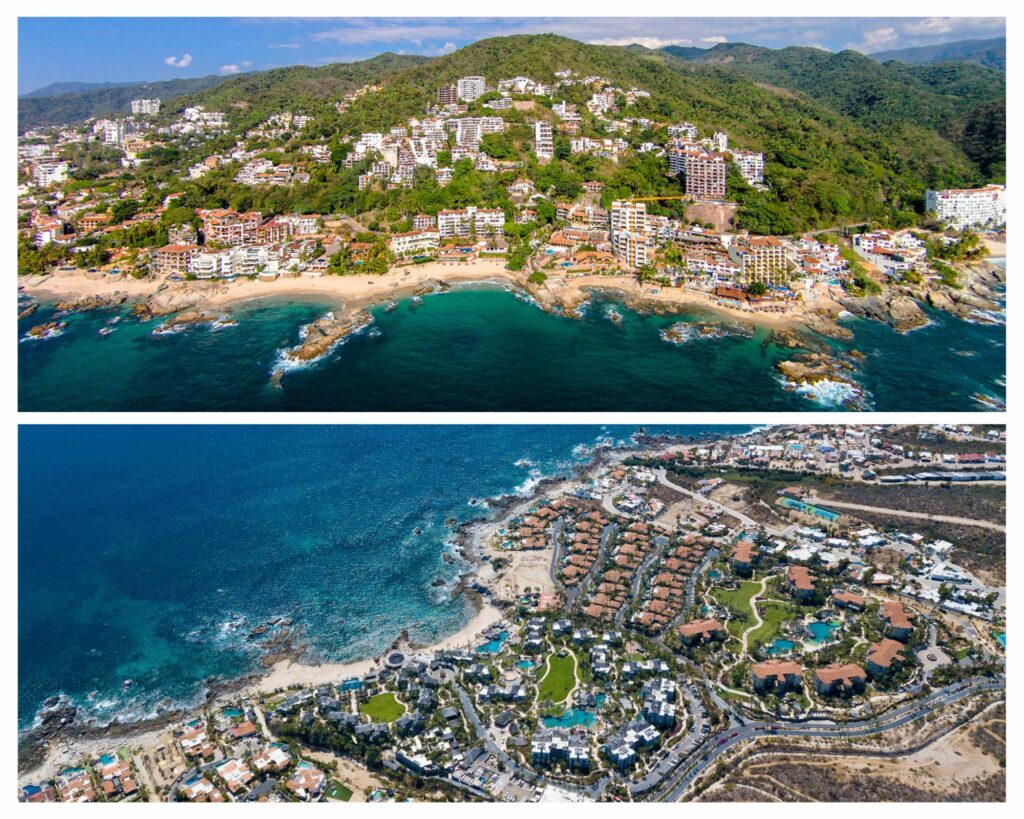
South of Puerto Vallarta the road ends at Boca de Tomatlán and the boat-only villages beyond it have never had one — Colomitos, Las Ánimas, Quimixto, Yelapa. Twenty minutes by panga and you are somewhere with no cars in it. And from the middle of December to the end of March the whales are inside the bay, which you can watch from a terrace with a coffee.
Across the Gulf of California, off Baja, Cabo Pulmo is the only coral reef in the Gulf of California, protected since 1995 because the fishing village that lived off it voted to stop.
The famous ones that are not a day trip
This is the part the lists leave out. Copper Canyon is in Chihuahua. Hierve el Agua is up in the Oaxacan valleys. Teotihuacán and Chapultepec Castle are in the Valley of Mexico, Monte Albán is above Oaxaca city, the monarch butterflies are in Michoacán and the Sumidero canyon is in Chiapas.
Every one of them is worth a holiday. None of them is an afternoon from a beach house on either coast, and a story that puts them in the same list as a cenote twenty minutes from your gate is wasting your week.
Pick the coast first and the wonders follow: the Riviera Maya for the cenotes and the cities, the Pacific for the islands and the villages with no road.
Start with our fully staffed houses in Mexico and tell Rocío which of these you actually want to be near.
Questions
Can you still climb a Maya pyramid?
One, and only under rules. INAH allows access to the Nohoch Mul pyramid at Cobá between eight in the morning and half past three, in groups of no more than fifteen people, for up to fifteen minutes at the top. At Tulum and Chichén Itzá the main structures are closed to entry: you walk around them, you do not go up them.
How far is Cobá from Tulum?
Forty-seven kilometres. INAH's own directions are to take federal highway 307 south from Cancún to the town of Tulum, then highway 109 towards Nuevo Xcan. The site is open eight to five with last entry at four, and it is about seventy square kilometres in extent, which is why you walk or cycle between the groups of buildings rather than across one plaza.
How much does Chichén Itzá cost?
Two tickets at one gate. INAH's own charge is the smaller one; the state of Yucatán adds a second, several times larger for a foreign visitor, sold at the same ticket office. INAH keeps both figures current on its own page, which is why we do not print them here. Hours are eight to five, last entry at four.
Which wonders are not a day trip from your houses?
Most of the famous ones. Copper Canyon is in Chihuahua, Hierve el Agua is in the Oaxacan valleys, Teotihuacán and Chapultepec are in the Valley of Mexico, Monte Albán is above Oaxaca city, the monarch reserve is in Michoacán and the Sumidero canyon is in Chiapas. They are worth a trip of their own. They are not an afternoon from a beach house, and anyone telling you otherwise has not done the drive.
What is Sian Ka'an?
A biosphere reserve on the Quintana Roo coast immediately south of Tulum, decreed in January 1986 and covering 528,147 hectares — about 375,000 of land and lagoon and 153,000 of sea. CONANP records 634 people living inside it. The Quintana Roo board puts sixteen kilometres of white sand between Tulum and its boundary.
Fully staffed villas in Mexico
Fully staffed villas across Punta Mita, Puerto Vallarta, Los Cabos and the Riviera Maya, with a private chef included at many of them.
Read next
5 Days in Puerto Vallarta: The Perfect Itinerary
One of the best ways to experience travel is by staying in a magnificent villa in Puerto Vallarta and allowing our concierge to help you create the perfect 5-day itinerary for your stay.